Anyrow vs CloudBurn
Side-by-side comparison to help you choose the right product.

Anyrow instantly extracts structured, editable data from PDFs and documents using AI.
Last updated: April 13, 2026

CloudBurn
Stop surprise AWS bills by seeing cost estimates in every pull request.
Last updated: February 28, 2026
Visual Comparison
Anyrow

CloudBurn
Feature Comparison
Anyrow
Schema-Driven AI Extraction
Ditch per-vendor templates forever. Define your data columns once—like "vendor," "invoice number," "amount," "due date"—and Anyrow's AI does the heavy lifting. It intelligently maps and extracts those specific fields from any document layout, whether it's a native PDF, a scanned image, or a camera photo. This adaptive approach handles format variations automatically, delivering consistent, structured rows with high confidence, typically in just over a second.
Live Editable Tables with Built-in Storage
Extracted data flows instantly into real-time, collaborative tables within Anyrow. This isn't just an export preview; it's a fully functional structured database. Your team can immediately review, sort, filter, edit, and correct data without switching apps. It provides a single source of truth for your extracted data, combining the extraction engine with a powerful storage and collaboration layer so you can manage everything in one place.
Multi-Format Export & Native Integrations
Get your clean data into any downstream system effortlessly. Export directly to common formats like CSV and Excel (XLSX) or JSON for developers. For automated pipelines, use the robust REST API, the convenient TypeScript SDK, or configure real-time webhooks. Anyrow is built to connect, ensuring the data you extract can instantly power your accounting software, ERP, spreadsheets, or custom applications.
Batch Processing & High-Volume Handling
Upload hundreds of documents at once for rapid, bulk processing. Anyrow is engineered for volume, enabling ops and finance teams to process large batches of invoices, receipts, or shipping documents in minutes instead of days. This batch capability, combined with per-document speeds of around 1.4 seconds, transforms back-office data entry from a days-long bottleneck into a swift, automated task.
CloudBurn
Real-Time Pre-Deployment Cost Analysis
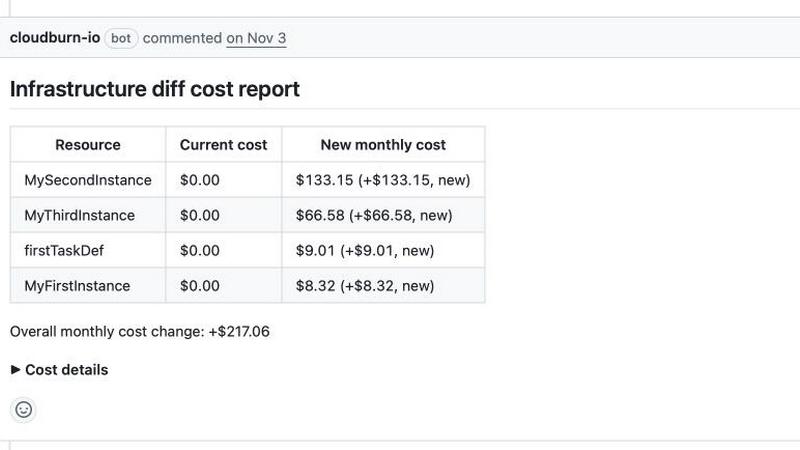
CloudBurn provides instant, accurate cost estimates for every infrastructure change before it merges into your main branch. By analyzing the output of your cdk diff or terraform plan, it calculates the precise monthly dollar impact using up-to-the-minute AWS pricing data. This feature eliminates guesswork and outdated spreadsheet models, giving developers and reviewers a clear financial context for every architectural decision during the code review phase, when it matters most.
Automated GitHub PR Comments
The tool seamlessly integrates into your GitHub workflow, automatically posting detailed cost reports as comments on relevant pull requests. This happens within seconds of a PR being opened or updated, requiring zero manual intervention. The comment breaks down costs per resource, shows the overall monthly change, and provides granular pricing details, making cost visibility an inherent, non-disruptive part of your standard development and review process.
Support for Terraform & AWS CDK
CloudBurn is built for the tools modern engineering teams use. It offers dedicated, easy-to-install GitHub Actions for both AWS CDK (CDK Diff PR Commenter) and Terraform (Terraform Plan PR Commenter). This native support ensures accurate parsing of infrastructure changes and reliable cost calculations, whether your team prefers declarative Terraform HCL or the programmatic power of the AWS CDK.
Proactive Cost Anomaly Prevention
Beyond simple reporting, CloudBurn acts as a financial guardrail for your infrastructure. By highlighting expensive resource changes—like accidentally provisioning a cluster of xlarge instances instead of micros—it prevents costly misconfigurations from ever reaching production. This proactive shield helps teams catch mistakes that could add thousands to the monthly bill, turning potential financial disasters into minor, pre-merge discussion points.
Use Cases
Anyrow
Accounts Payable & Invoice Processing
Automate the entire invoice-to-ledger workflow. Upload batches of supplier invoices in any format. Anyrow extracts key data like vendor details, invoice numbers, amounts, and due dates into structured rows. The finance team can quickly review, approve, and edit within the platform before exporting the clean data directly into their accounting software or ERP, slashing processing time and manual errors.
Receipt & Expense Management
Streamline expense reporting for employees or clients. Staff simply photograph or forward receipt emails. Anyrow extracts merchant names, dates, totals, and tax amounts, populating a centralized, audit-ready table. Bookkeepers can then easily categorize expenses, resolve discrepancies, and export finalized reports for reimbursement or client billing in a fraction of the usual time.
Logistics & Shipping Document Processing
Parse bills of lading, packing slips, and delivery notes at scale. Dispatchers and logistics coordinators upload documents to automatically extract critical data like PO numbers, shipment IDs, weights, and destinations. This data feeds directly into tracking systems and freight audits, providing real-time visibility and eliminating manual data entry from chaotic paper trails.
Client Onboarding & Document Intake
Accelerate KYC (Know Your Customer) and client onboarding for accounting firms or financial services. Upload identification documents, bank statements, and application forms. Anyrow pulls out structured client data (names, addresses, account numbers), organizing it into neat, searchable tables. This reduces manual data scrubbing, speeds up setup, and improves data accuracy for new client profiles.
CloudBurn
Enabling Cost-Aware Code Reviews
Engineering teams can integrate financial accountability directly into their peer review process. Reviewers no longer have to wonder about the cost implications of a change; they are presented with a clear dollar figure alongside the code diff. This empowers teams to ask questions like "Is this the most cost-effective way to achieve our goal?" and fosters a collaborative culture where cost optimization is a shared engineering responsibility, not just a finance team concern.
Preventing Costly Deployment Mistakes
Platform and DevOps engineers use CloudBurn as a critical safety net. It automatically flags high-cost changes in pull requests, such as unintentionally switching instance types, enabling expensive features, or misconfiguring auto-scaling groups. This allows teams to catch and correct errors that would otherwise go unnoticed until the next billing cycle, preventing budget overruns and the painful, risky process of refactoring live production resources.
Streamlining FinOps for Engineering Teams
CloudBurn automates the first and most crucial step of the FinOps lifecycle—inform. It provides engineers with real-time cost data exactly when and where they need it: as they are writing and reviewing infrastructure code. This eliminates the friction and delay of manual cost estimation processes, seamlessly embedding financial governance into the CI/CD pipeline and allowing FinOps practices to scale with engineering velocity.
Onboarding and Educating Developers
For teams growing their cloud expertise, CloudBurn serves as an invaluable educational tool. New developers can see the direct cost impact of their infrastructure choices as they learn, building cost intuition from day one. It provides immediate, contextual feedback, helping to train engineers to think about cost efficiency as a fundamental aspect of building and shipping cloud-native applications.
Overview
About Anyrow
Anyrow is the AI-powered document extraction engine that turns unstructured chaos into structured data in seconds. It's built for ops teams, bookkeepers, accounting firms, logistics dispatchers, and finance professionals who are tired of the manual grind and the tech stack sprawl. The core value proposition is stunningly simple: drop any document—PDFs, scans, invoices, receipts, emails, Word files, Excel sheets, or images—and get back clean, editable rows in a live table. Anyrow eliminates the need for fragile, per-vendor templates. Instead, you define your data schema (the columns you need) once. Its schema-driven AI then intelligently finds and extracts those specific fields across any document layout, whether it's a native digital PDF, a scanned document, or a photographed receipt. The platform consolidates your entire workflow: extraction, structured storage, review, editing, and querying all happen in one login. Then, push your production-ready data out via CSV, XLSX, JSON, REST API, TypeScript SDK, or webhooks. Anyrow is designed to replace the cumbersome patchwork of tools like Parseur (extraction), Airtable (storage), and Zapier (automation), delivering extraction, storage, CRUD operations, and API access in a single, agile product.
About CloudBurn
CloudBurn is the proactive FinOps shield engineered for modern development teams deploying on AWS. It's built specifically for developers and platform engineers using Terraform or AWS CDK who are tired of the reactive, post-mortem shock of a spiraling cloud bill. The core problem it tackles is the critical absence of a financial feedback loop during the development cycle. Teams currently make infrastructure changes in isolation, deploy them, and only discover the cost impact weeks later when the bill arrives—long after changes are costly and risky to undo. CloudBurn flips this broken model on its head by injecting real-time, actionable AWS cost intelligence directly into the code review process. When a pull request with infrastructure changes is opened, CloudBurn automatically analyzes the diff, calculates the precise monthly cost impact using live AWS pricing data, and posts a clear, detailed report as a PR comment. This transforms cost from a post-deployment accounting surprise into a first-class, pre-deployment engineering metric. It empowers teams to debate, optimize, and prevent expensive mistakes while the code is still in review and changes are trivial to make. By integrating seamlessly into your existing GitHub CI/CD workflow, CloudBurn enables a culture of cost-aware development, delivers immediate ROI by catching costly misconfigurations early, and ensures your team ships infrastructure with both performance and budget in mind.
Frequently Asked Questions
Anyrow FAQ
What types of documents can Anyrow process?
Anyrow is built for document diversity. It can process native digital PDFs, scanned PDFs, images (JPEG, PNG), photographs of documents, Microsoft Word files, Excel spreadsheets, and even text extracted from emails. The AI is trained to handle structured, semi-structured, and unstructured layouts commonly found in invoices, receipts, forms, and reports.
How accurate is the AI extraction?
The AI delivers high accuracy, typically demonstrating 99%+ confidence on well-formed documents, as noted in the provided example. Accuracy is maintained across various layouts because the system uses your defined schema to target specific fields, rather than relying on rigid templates. Any extracted data is instantly available for human review and editing within the live tables to ensure 100% correctness before export.
Do I need to create a template for every vendor or document type?
No. This is the core innovation of Anyrow. You do not create per-vendor or per-document-type templates. Instead, you define a single schema for your project—the set of columns you need (e.g., Invoice Date, Amount, Vendor). The AI uses this schema to find and extract the corresponding data from any document you upload, regardless of its visual layout or source.
How do I get my data out of Anyrow?
You have multiple robust options. For manual downloads, you can export your tables directly to CSV or Excel (XLSX) format. For developers and automated workflows, you can export as JSON, use the comprehensive REST API for programmatic access, utilize the TypeScript SDK, or configure webhooks to push data to other apps in real-time. Anyrow is designed to fit seamlessly into your existing data stack.
CloudBurn FAQ
How does CloudBurn calculate cost estimates?
CloudBurn calculates estimates by analyzing the infrastructure-as-code diff from your pull request (via cdk diff or terraform plan). It identifies the specific AWS resources being added, modified, or removed. Then, it queries the official, real-time AWS Price List API to fetch the most current On-Demand pricing for those resources in your specified region. It calculates a projected monthly cost based on 730 hours of usage per month, providing a highly accurate forecast of your bill impact.
Is my code or cloud configuration data secure?
Yes, security is a foundational principle. CloudBurn is a GitHub-native application. All billing, setup, and permissions are handled 100% through GitHub. The tool only receives the parsed output of your infrastructure diff (the plan or diff text), not your actual Terraform state files, AWS credentials, or repository code. This architecture ensures your sensitive configuration and cloud access remain entirely within your secure GitHub environment.
What is the difference between the Community and Pro plans?
The Community plan is free forever and provides core cost estimation functionality for unlimited users and repositories. The Pro plan includes advanced features such as cost trend analysis over time, the ability to set custom cost budgets and alerts for PRs, detailed historical reporting, and priority support. New users can experience all Pro features for free during a 14-day trial with no credit card required.
How quickly does the cost comment appear on a pull request?
The cost report comment is posted automatically and typically appears on your pull request within seconds. The speed depends on the complexity of your infrastructure diff and the runtime of your GitHub Action workflow that generates the cdk diff or terraform plan. Once CloudBurn receives the diff output from the action, its analysis and comment posting are near-instantaneous.
Alternatives
Anyrow Alternatives
Anyrow is an AI-powered document extraction and structured data platform. It automates the tedious process of pulling data from PDFs, invoices, emails, and scans into clean, editable tables. This places it squarely in the categories of AI automation and productivity software, designed to eliminate manual data entry. Users often explore alternatives for several key reasons. Budget constraints, specific feature requirements like advanced OCR or native integrations, and the need for a different deployment model (like on-premise) can drive the search. Some teams may already have parts of the stack in place and seek a more modular tool. When evaluating options, focus on core capabilities. Look for robust AI that handles diverse layouts without per-template setup, built-in data storage and management, and flexible export and API access. The goal is to find a solution that truly consolidates your workflow, saving time and reducing the complexity of using multiple disconnected apps.
CloudBurn Alternatives
CloudBurn is a proactive FinOps tool for developers, designed to stop surprise AWS bills by providing real-time infrastructure cost estimates directly within pull requests. It falls into the category of cost visibility and governance tools for cloud infrastructure. Teams may explore alternatives for various reasons, such as budget constraints, needing support for additional cloud providers beyond AWS, or requiring deeper integration with specific CI/CD platforms or infrastructure-as-code frameworks. The search for the right fit is driven by the need to balance cost, functionality, and workflow compatibility. When evaluating options, prioritize solutions that offer accurate, real-time pricing, seamless automation within your existing developer workflow, and actionable insights that empower your team to make cost-conscious decisions during development, not after deployment.