Clarity vs Quitlo
Side-by-side comparison to help you choose the right product.


Quitlo uses AI voice calls to uncover true churn reasons, delivering insights to your team in real time for better.
Last updated: March 4, 2026
Visual Comparison
Clarity
Quitlo

Overview
About Clarity
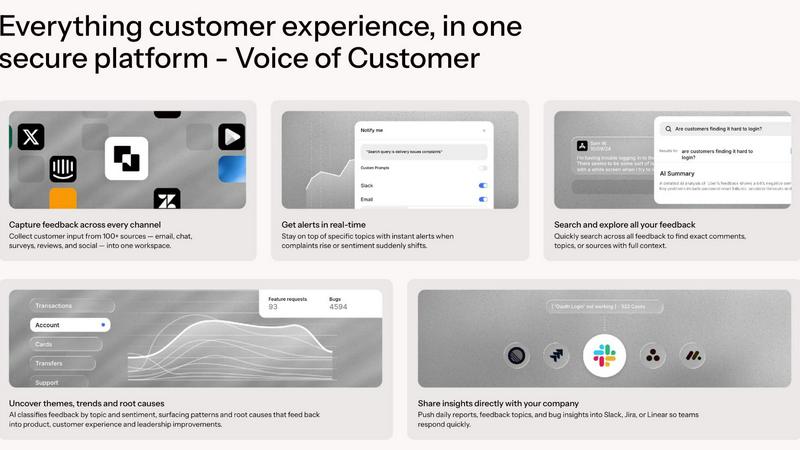
Clarity is an AI-powered customer experience platform built for enterprises that take customer trust seriously. The platform combines three core capabilities: Voice of Customer (VoC) intelligence that turns every customer interaction into actionable insights, AI Support Automation that resolves customer queries instantly and accurately, and Agent Assist that empowers support teams with real-time guidance and knowledge. Clarity helps enterprise teams reduce support costs, improve CSAT scores and uncover the trends hiding in millions of customer conversations. Purpose-built for organizations where compliance, accuracy and trust matter most, Clarity is trusted by leading brands across the Middle East, Europe and beyond. Available on Google Cloud Marketplace.
About Quitlo
Quitlo is the pioneering Churn Intelligence Platform designed specifically for B2B SaaS companies. It addresses a pervasive issue in customer retention: traditional exit surveys and cancellation forms often yield minimal information, with response rates plummeting as low as 8%. Customers typically provide one-word responses that leave teams guessing about the real reasons behind their departure. Quitlo revolutionizes this by replacing static forms with dynamic, empathetic AI-driven conversations, available through both voice and text. The platform automatically detects crucial signals like cancellations, low NPS scores, or payment failures and initiates a meaningful two-minute dialogue with customers. This approach uncovers the full story behind churn signals, delivering structured, actionable insights directly to tools such as Slack or Jira. With Quitlo, B2B SaaS teams gain a deeper understanding of customer sentiment, competitor mentions, and save opportunities, transforming elusive data points into robust retention strategies that not only save revenue but also inform product and service improvements.