CloudBurn vs Tickari
Side-by-side comparison to help you choose the right product.

CloudBurn
Stop surprise AWS bills by seeing cost estimates in every pull request.
Last updated: February 28, 2026

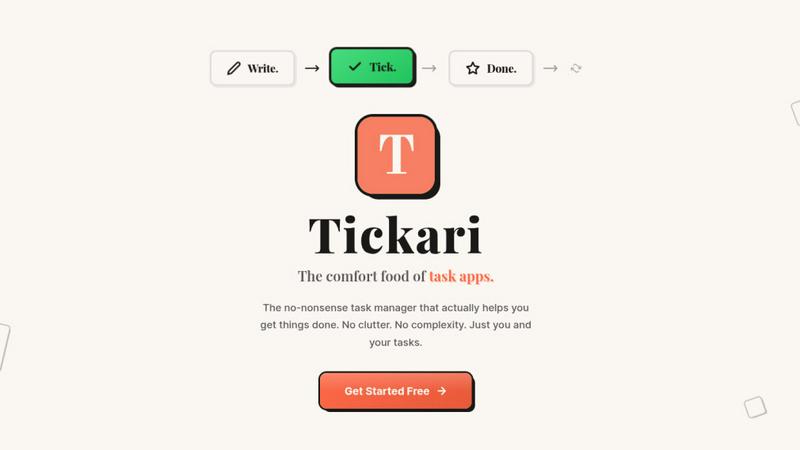
Tickari is the no-nonsense task manager that cuts the clutter so you can finally start doing.
Last updated: April 13, 2026
Visual Comparison
CloudBurn
Tickari
Feature Comparison
CloudBurn
Real-Time Pre-Deployment Cost Analysis
CloudBurn provides instant, accurate cost estimates for every infrastructure change before it merges into your main branch. By analyzing the output of your cdk diff or terraform plan, it calculates the precise monthly dollar impact using up-to-the-minute AWS pricing data. This feature eliminates guesswork and outdated spreadsheet models, giving developers and reviewers a clear financial context for every architectural decision during the code review phase, when it matters most.
Automated GitHub PR Comments
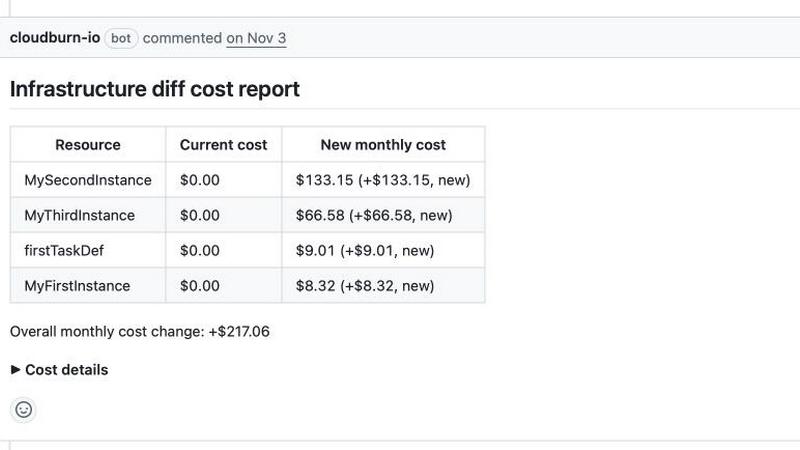
The tool seamlessly integrates into your GitHub workflow, automatically posting detailed cost reports as comments on relevant pull requests. This happens within seconds of a PR being opened or updated, requiring zero manual intervention. The comment breaks down costs per resource, shows the overall monthly change, and provides granular pricing details, making cost visibility an inherent, non-disruptive part of your standard development and review process.
Support for Terraform & AWS CDK
CloudBurn is built for the tools modern engineering teams use. It offers dedicated, easy-to-install GitHub Actions for both AWS CDK (CDK Diff PR Commenter) and Terraform (Terraform Plan PR Commenter). This native support ensures accurate parsing of infrastructure changes and reliable cost calculations, whether your team prefers declarative Terraform HCL or the programmatic power of the AWS CDK.
Proactive Cost Anomaly Prevention
Beyond simple reporting, CloudBurn acts as a financial guardrail for your infrastructure. By highlighting expensive resource changes—like accidentally provisioning a cluster of xlarge instances instead of micros—it prevents costly misconfigurations from ever reaching production. This proactive shield helps teams catch mistakes that could add thousands to the monthly bill, turning potential financial disasters into minor, pre-merge discussion points.
Tickari
Zero-Friction Interface
The moment you open Tickari, you are working. There is no onboarding flow, no account setup barrier, and no complex dashboard to decipher. The interface presents a clean, focused space where your only options are to add a task or check one off. This elimination of initial friction ensures you spend zero time configuring the tool and 100% of your time on the tasks that matter, making it the fastest way to go from thought to action.
Deliberate Feature Minimalism
Tickari is defined by what it doesn't have. You won't find tags, priority flags, complex project boards, AI assistants, or color-coded calendars. This intentional constraint is a feature in itself. By removing the endless decisions that come with feature-rich apps—"Should I tag this? What priority is it? Which board does it go in?"—Tickari eliminates decision fatigue and cognitive clutter, allowing you to focus solely on the next actionable item.
Instant Task Capture & Completion
The core workflow is engineered for speed. Adding a task is as simple as typing and hitting enter. Completing a task is a single, satisfying click. This rapid capture-and-completion cycle creates a powerful momentum, turning your to-do list from a stagnant inventory into a dynamic flow of progress. It turns task management from a chore into a quick, rewarding habit.
The "Tickari Pro" Personal Hub
For users who want to share their public notes or tasks, Tickari Pro offers a personalized corner of the internet. It provides a custom subdomain (like yourname.tickari.com) where you can host a clean, minimalist profile page to share lists or notes with the world. This extends the simple philosophy to public sharing, without adding complexity to the core private task management experience.
Use Cases
CloudBurn
Enabling Cost-Aware Code Reviews
Engineering teams can integrate financial accountability directly into their peer review process. Reviewers no longer have to wonder about the cost implications of a change; they are presented with a clear dollar figure alongside the code diff. This empowers teams to ask questions like "Is this the most cost-effective way to achieve our goal?" and fosters a collaborative culture where cost optimization is a shared engineering responsibility, not just a finance team concern.
Preventing Costly Deployment Mistakes
Platform and DevOps engineers use CloudBurn as a critical safety net. It automatically flags high-cost changes in pull requests, such as unintentionally switching instance types, enabling expensive features, or misconfiguring auto-scaling groups. This allows teams to catch and correct errors that would otherwise go unnoticed until the next billing cycle, preventing budget overruns and the painful, risky process of refactoring live production resources.
Streamlining FinOps for Engineering Teams
CloudBurn automates the first and most crucial step of the FinOps lifecycle—inform. It provides engineers with real-time cost data exactly when and where they need it: as they are writing and reviewing infrastructure code. This eliminates the friction and delay of manual cost estimation processes, seamlessly embedding financial governance into the CI/CD pipeline and allowing FinOps practices to scale with engineering velocity.
Onboarding and Educating Developers
For teams growing their cloud expertise, CloudBurn serves as an invaluable educational tool. New developers can see the direct cost impact of their infrastructure choices as they learn, building cost intuition from day one. It provides immediate, contextual feedback, helping to train engineers to think about cost efficiency as a fundamental aspect of building and shipping cloud-native applications.
Tickari
Beating Procrastination & Overwhelm
When a big project feels paralyzing, breaking it down in a complex tool can become its own form of avoidance. Tickari cuts through that. Quickly dump the first three small, actionable steps into the list. The simplicity makes starting less daunting, and the act of ticking off those first few items builds immediate momentum to tackle larger pieces, breaking the cycle of procrastination.
Daily Personal Task Juggling
For managing the daily flood of personal errands, home admin, and quick reminders, you don't need a project management suite. Tickari is the perfect digital scratchpad. Jot down "call vet," "pick up dry cleaning," and "pay electricity bill" in seconds. The uncluttered view keeps these tasks top-of-mind, and checking them off provides a clear, satisfying record of your daily accomplishments.
Meeting & Lecture Note Action Items
During meetings or lectures, you often need to capture quick follow-ups without getting distracted by software. With Tickari open in a browser tab, you can instantly capture action items like "email Sarah the report" or "research topic X" as they come up. After the session, you have a clean, focused list of exactly what needs to be done next, with no extraneous notes to sort through.
Creative Project Focus
Writers, developers, and artists often need to manage a pipeline of creative tasks without the tool itself becoming a distraction. Tickari allows them to list out discrete creative actions—"sketch concept A," "write chapter 3 intro," "debug login function"—in a serene, minimalist environment. This keeps the focus on the creative work itself, not on organizing or categorizing it.
Overview
About CloudBurn
CloudBurn is the proactive FinOps shield engineered for modern development teams deploying on AWS. It's built specifically for developers and platform engineers using Terraform or AWS CDK who are tired of the reactive, post-mortem shock of a spiraling cloud bill. The core problem it tackles is the critical absence of a financial feedback loop during the development cycle. Teams currently make infrastructure changes in isolation, deploy them, and only discover the cost impact weeks later when the bill arrives—long after changes are costly and risky to undo. CloudBurn flips this broken model on its head by injecting real-time, actionable AWS cost intelligence directly into the code review process. When a pull request with infrastructure changes is opened, CloudBurn automatically analyzes the diff, calculates the precise monthly cost impact using live AWS pricing data, and posts a clear, detailed report as a PR comment. This transforms cost from a post-deployment accounting surprise into a first-class, pre-deployment engineering metric. It empowers teams to debate, optimize, and prevent expensive mistakes while the code is still in review and changes are trivial to make. By integrating seamlessly into your existing GitHub CI/CD workflow, CloudBurn enables a culture of cost-aware development, delivers immediate ROI by catching costly misconfigurations early, and ensures your team ships infrastructure with both performance and budget in mind.
About Tickari
Tickari is the antidote to productivity bloat. It's a deliberately minimal, no-nonsense task manager built for a specific type of person: the doer who is tired of organizing and just wants to execute. In a world saturated with complex kanban boards, AI-powered suggestions, and endless customization options that promise productivity but deliver procrastination, Tickari takes a radical stand. Its philosophy is "less but better." It strips away every ounce of friction, clutter, and cognitive overhead to deliver a pure, instant workflow: write a task, tick it off, and move on. There is no setup, no tutorial, and no learning curve. The interface is clean, intuitive, and works the second you open it. Tickari is for the professional, student, or creator who feels stuck in the meta-work of managing their tools instead of completing their actual work. It's the comfort food of task apps—reliable, satisfying, and without any unnecessary garnish. Its core value proposition is ruthless simplicity that translates directly into action, helping you stop planning and start doing.
Frequently Asked Questions
CloudBurn FAQ
How does CloudBurn calculate cost estimates?
CloudBurn calculates estimates by analyzing the infrastructure-as-code diff from your pull request (via cdk diff or terraform plan). It identifies the specific AWS resources being added, modified, or removed. Then, it queries the official, real-time AWS Price List API to fetch the most current On-Demand pricing for those resources in your specified region. It calculates a projected monthly cost based on 730 hours of usage per month, providing a highly accurate forecast of your bill impact.
Is my code or cloud configuration data secure?
Yes, security is a foundational principle. CloudBurn is a GitHub-native application. All billing, setup, and permissions are handled 100% through GitHub. The tool only receives the parsed output of your infrastructure diff (the plan or diff text), not your actual Terraform state files, AWS credentials, or repository code. This architecture ensures your sensitive configuration and cloud access remain entirely within your secure GitHub environment.
What is the difference between the Community and Pro plans?
The Community plan is free forever and provides core cost estimation functionality for unlimited users and repositories. The Pro plan includes advanced features such as cost trend analysis over time, the ability to set custom cost budgets and alerts for PRs, detailed historical reporting, and priority support. New users can experience all Pro features for free during a 14-day trial with no credit card required.
How quickly does the cost comment appear on a pull request?
The cost report comment is posted automatically and typically appears on your pull request within seconds. The speed depends on the complexity of your infrastructure diff and the runtime of your GitHub Action workflow that generates the cdk diff or terraform plan. Once CloudBurn receives the diff output from the action, its analysis and comment posting are near-instantaneous.
Tickari FAQ
Is there really no onboarding or account needed?
Yes, that's correct. You can start using Tickari's core task management functionality instantly without creating an account, providing an email, or going through any tutorial. This is central to its frictionless design. For Pro features like a custom subdomain, an account is required, but the free experience is designed to be immediate and barrier-free.
How does Tickari handle projects or due dates?
It doesn't, by design. Tickari operates on the principle that adding layers like due dates and project categories often becomes a form of procrastination. The goal is to present a single, flat list of your most immediate priorities. For complex project planning, it's recommended to use a separate, more specialized tool. Tickari excels at the "doing" phase once your plan is set.
Can I access my tasks on multiple devices?
The provided context focuses on the web-based experience and its instant access. For seamless multi-device syncing, a user account would typically be required. The free, instant-use version is likely optimized for simplicity and may prioritize session-based use on a single browser, while Pro likely enables synced access across devices.
What's the difference between the free and Pro version?
The free version offers the complete, no-nonsense core task manager with instant access. Tickari Pro adds the ability to create a public, personalized profile page on a custom subdomain (e.g., yourname.tickari.com). This is for users who want to share lists or notes with others in the same clean, minimalist format, without adding any complexity to the private task management interface.
Alternatives
CloudBurn Alternatives
CloudBurn is a proactive FinOps tool for developers, designed to stop surprise AWS bills by providing real-time infrastructure cost estimates directly within pull requests. It falls into the category of cost visibility and governance tools for cloud infrastructure. Teams may explore alternatives for various reasons, such as budget constraints, needing support for additional cloud providers beyond AWS, or requiring deeper integration with specific CI/CD platforms or infrastructure-as-code frameworks. The search for the right fit is driven by the need to balance cost, functionality, and workflow compatibility. When evaluating options, prioritize solutions that offer accurate, real-time pricing, seamless automation within your existing developer workflow, and actionable insights that empower your team to make cost-conscious decisions during development, not after deployment.
Tickari Alternatives
Tickari is a minimalist task manager in the productivity software category, built for those who want to cut through the noise and focus purely on execution. Its philosophy is one of radical simplicity, stripping away every non-essential feature to leave only a clean, immediate interface for listing and completing tasks. Users often explore alternatives for various practical reasons. Some may require more advanced capabilities like team collaboration, project timelines, or deep integrations. Others might have specific budget constraints, need a different platform like a dedicated desktop app, or simply prefer a different visual approach to task management. When evaluating other options, consider your true needs versus wants. Look for a tool that aligns with your workflow without adding unnecessary steps. The best alternative minimizes the gap between your intention to do work and actually doing it, ensuring you spend less time managing tasks and more time completing them.