Cybersecurity Readiness Game vs Skene
Side-by-side comparison to help you choose the right product.

Cybersecurity Readiness Game
Test your team's real-world cyber defense skills with a free, hands-on breach simulation.
Last updated: March 18, 2026

Skene turns your codebase into AI-driven growth prompts you own and control.
Last updated: February 28, 2026
Visual Comparison
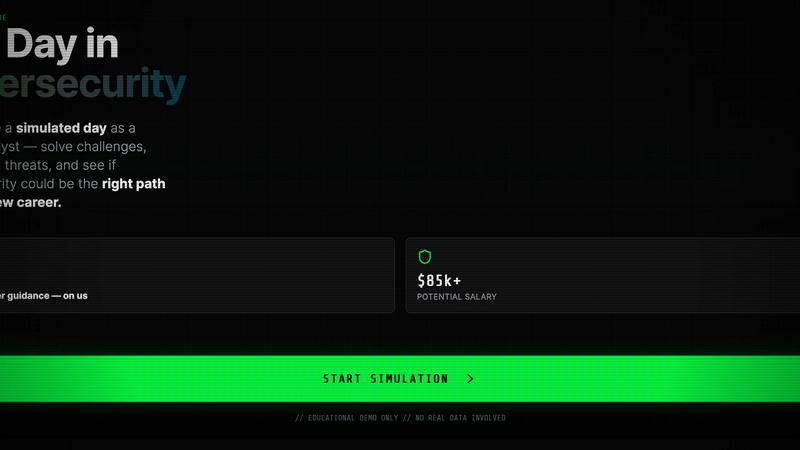
Cybersecurity Readiness Game
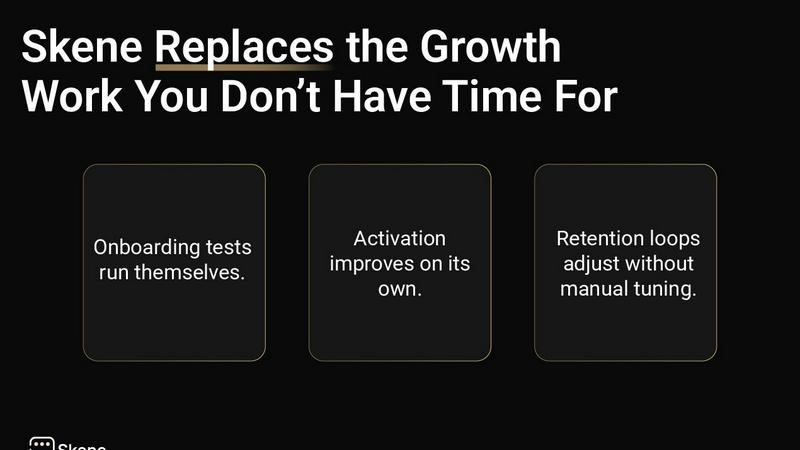
Skene
Feature Comparison
Cybersecurity Readiness Game
Zero-Barrier, No-Registration Access
Jump into training instantly without any sign-up forms, account creation, or software installation. This feature prioritizes immediate skill-building by removing all friction, allowing users to launch a realistic security scenario within seconds. It's designed for agile learning sessions, spontaneous team exercises, or quick personal assessments, ensuring that readiness improvement is always just one click away.
Real-World Scenario-Based Learning
Confront credible, meticulously crafted threat simulations that mirror actual cyber incidents security engineers face. Each scenario unfolds dynamically, presenting complex challenges that require quick analysis and decisive action. This method moves beyond passive learning, embedding critical thinking and procedural knowledge through direct, hands-on problem-solving in a controlled yet authentic environment.
Clear Performance Metrics & Impact Analysis
Receive immediate, objective feedback on every decision you make during the simulation. The tool evaluates your actions, detailing the consequences and effectiveness of your response. This results in a concise performance insight report that highlights strengths, pinpoints security gaps, and provides a clear roadmap for targeted skill improvement, turning every session into a measurable learning outcome.
Internal Skill Development Focus
Address the critical cybersecurity talent shortage by empowering your existing team to build expertise from within. This tool serves as a continuous, scalable training platform that elevates the security IQ across your organization. It transforms employees from potential vulnerabilities into informed human firewalls, effectively closing the readiness gap without the need for immediate external hiring.
Skene
Codebase-Native Signal Detection
Skene connects directly to your GitHub or GitLab repository with read-only access, analyzing your codebase to automatically detect growth signals, user friction points, and activation opportunities. It understands your product's structure and user flows at the code level, eliminating the need for manual instrumentation or external tracking scripts. This provides a deep, contextual understanding of how users interact with your core product.
Autonomous Growth Loop Engine
The platform acts as a fully automated iteration engine. It doesn't just identify problems; it autonomously creates, tests, and deploys optimized versions of user flows for onboarding, activation, and retention. Your product's growth mechanisms continuously improve themselves based on real user data, turning your product into a self-optimizing growth engine without manual intervention from a dedicated team.
Prompt-Driven Growth Infrastructure
Growth starts with a single prompt. Skene provides a context layer for your AI, allowing you or your AI agent to command growth implementations directly from your IDE or terminal. You can analyze, audit, and implement changes through natural language prompts, making growth a programmable and version-controlled part of your development workflow, just like any other feature.
Owned & Version-Controlled Stack
Replace fragile third-party widgets and black-box scripts with code you own. Skene integrates growth directly into your tech stack, allowing you to version, prompt, and control all growth logic. This eliminates performance bottlenecks from external snippets, prevents data siloing, and ensures your growth infrastructure is as robust and maintainable as the rest of your application.
Use Cases
Cybersecurity Readiness Game
Upskilling Internal IT & Security Teams
Security leaders can deploy the game as a regular training drill for their analysts and engineers. It provides a cost-effective, engaging way to keep skills sharp, test new response protocols, and foster a culture of continuous security awareness. Teams can run through different scenarios to prepare for a wide range of incidents, from phishing campaigns to ransomware attacks.
Onboarding and Training New Hires
Accelerate the ramp-up time for new employees joining security or IT roles. The simulation offers a practical, immersive introduction to the types of decisions and pressures they will encounter, complementing theoretical onboarding materials. It helps assess their instinctual response capabilities and identifies areas where they need further mentorship or training early on.
Career Exploration for Aspiring Professionals
Individuals considering a shift into cybersecurity can use the tool to experience a "day in the life" of a security engineer. It provides a tangible, hands-on taste of the field's challenges and demands, helping them assess their aptitude and interest before committing to a full bootcamp or career change. This practical insight is invaluable for making an informed career decision.
Conducting Team-Wide Security Readiness Assessments
Organizations can utilize the game to conduct broad, baseline assessments of their workforce's cybersecurity readiness. By analyzing aggregate performance data from across departments, management can identify common knowledge gaps, measure the effectiveness of current security training programs, and strategically allocate resources to areas with the highest risk exposure.
Skene
Automated Onboarding Flow Optimization
For teams drowning in manual tour creation and maintenance, Skene automatically generates and iterates onboarding flows by analyzing user behavior in your code. It identifies where users drop off and autonomously deploys better guidance, slashing time-to-value and boosting activation rates without a single line of manual tour code.
Self-Healing Customer Journeys
Stop worrying about UI overlays breaking after every deploy. Skene's code-native approach means all onboarding and lifecycle automation updates itself when you push new code. It continuously audits the user journey against your latest codebase, ensuring guidance and growth loops are always in sync with your live product.
Indie Hacker & Startup Scaling
Indie developers and early-stage startups can implement sophisticated, data-driven PLG strategies without a growth team. Skene acts as your "growth team in a box," enabling you to compete with larger players by systematically tightening activation funnels and improving retention, all while conserving critical resources and headcount.
AI-Agent Driven Development
Integrate growth directly into your AI-powered development workflow. Your AI agent can use Skene's context layer to analyze the codebase for growth opportunities and execute prompt-driven implementations. This allows for fully automated, intelligent iteration cycles where your AI assistant can directly ship growth improvements.
Overview
About Cybersecurity Readiness Game
The Cybersecurity Readiness Game is a dynamic, no-fluff simulation tool designed to transform theoretical knowledge into actionable defense skills. It immerses users directly into high-stakes, real-world threat scenarios, forcing them to make critical security decisions under pressure. This hands-on approach closes the pervasive human error gap—the root cause of over 70% of breaches—by providing a safe, consequence-free environment to practice. The tool is built for speed and impact: with no registration required, individuals and teams can immediately engage, evaluate their choices, and receive clear, performance-based insights. It delivers a practical, unvarnished view of your true cybersecurity posture, moving beyond checklists to build genuine, internal competency. Whether you're a security leader aiming to upskill your team, an IT professional sharpening your response instincts, or someone exploring a career in cyber, this game provides the essential, experience-driven training needed to fortify your first line of defense against evolving threats.
About Skene
Skene is the AI-powered PLG (Product-Led Growth) infrastructure that transforms how products scale. It's a fully automated iteration engine designed to drive user growth without the need for a dedicated growth team. By connecting directly to your codebase and IDE, Skene observes real user actions to detect friction points and activation drop-offs. It then autonomously creates, tests, and deploys optimized versions of user flows for onboarding, activation, and retention. This means your product's growth mechanisms improve themselves continuously, based on a deep understanding of your actual customer code. Built for indie developers, early-stage startups, and established PLG companies, Skene acts as a "growth team in a box." It allows builders to offload growth work, tighten activation funnels, and expand customer lifetime value—all without adding headcount or managing brittle, third-party widgets. Its core promise is to make growth a native, ownable part of your tech stack that you can version, prompt, and control, ending reliance on external black-box scripts.
Frequently Asked Questions
Cybersecurity Readiness Game FAQ
What is cybersecurity readiness?
Cybersecurity readiness is the proactive state of being prepared to effectively prevent, detect, respond to, and recover from cyber threats and incidents. It involves having the right tools, processes, and, most critically, a skilled team capable of making fast, correct decisions under pressure. This game directly builds that human decision-making capability, which is a core component of overall readiness.
Why is cybersecurity readiness important?
It is critical because cybercrime costs are projected to hit $10.5 trillion annually, and human error is involved in most breaches. Strong readiness limits financial and reputational damage by ensuring your team can act swiftly and correctly. In a landscape with a global shortage of 3 million cybersecurity professionals, building internal readiness is not just an advantage—it's a necessity for survival.
Is this tool completely free to use?
Yes, the Cybersecurity Readiness Game is 100% free with no hidden costs or registration required. You can access the simulation and all its features immediately, allowing for unlimited practice and skill development. This removes all barriers for individuals and organizations looking to strengthen their defensive capabilities without upfront investment.
How does this tool help if I have no IT background?
The game is designed as an accessible entry point. The scenario-based learning approach teaches through doing, providing context and immediate feedback on your actions. It's an excellent way to gain practical, applied understanding of cybersecurity principles, making it ideal for career switchers or professionals in non-technical roles who need to understand security risks.
Skene FAQ
How is Skene different from traditional customer experience software?
Traditional tools require manual tour creation, constant maintenance, and rely on brittle UI overlays that break with every deploy. Skene is fundamentally different; it reads your codebase and automatically generates onboarding, analytics, and lifecycle automation. When you push code, Skene's systems update themselves, eliminating maintenance overhead and fragility.
How long does it take to set up?
Setup takes less than 60 seconds. You simply connect your GitHub or GitLab repository (read-only access is sufficient), and Skene automatically analyzes your codebase to generate PLG flows. No initial code changes, API modifications, or complex configuration is required to get started.
Is my code secure?
Absolutely. Security is a core principle. Skene only requires read-only access to your repository. All analysis happens in a secure, isolated environment. We do not store your source code, and the system is designed to respect your intellectual property and privacy at all times.
What kind of analytics do you provide?
Skene's dashboard provides real-time analytics on user progress, completion rates, and engagement metrics. It focuses on outcome-based insights like time-to-value and bottleneck identification, allowing you to measure the direct impact of optimizations and make data-driven decisions to improve your product-led growth loops.
Alternatives
Cybersecurity Readiness Game Alternatives
The Cybersecurity Readiness Game is a dynamic productivity tool that simulates real-world breaches to test and train team decision-making. It places participants directly into credible threat scenarios, providing a practical, no-registration-required method to evaluate and improve cyber incident response. Users often seek alternatives for various practical reasons. Common drivers include budget constraints, the need for specific platform integrations, or requirements for more advanced reporting and team management features. Different organizational sizes and security maturity levels also demand tailored solutions. When evaluating other options, prioritize tools that offer realistic, engaging scenarios that mirror current threats. Look for clear performance analytics that pinpoint skill gaps and ensure the platform can scale with your team's growth. The goal is to find a solution that effectively closes the human error gap with actionable insights.
Skene Alternatives
Skene is an AI-powered PLG infrastructure that automates product-led growth by turning your codebase into a self-optimizing engine. It belongs to the productivity and management category, specifically designed for developers and product teams who want to scale user growth autonomously. Users often explore alternatives for several reasons. These include budget constraints, specific feature needs not covered, or a preference for a different implementation model, such as manual control over fully autonomous systems. Platform compatibility and the desire for more traditional analytics versus AI-driven action are also common drivers. When evaluating options, focus on core capabilities. Look for solutions that deeply integrate with your development workflow, offer actionable insights beyond basic analytics, and provide clear ownership of the growth logic. The ideal tool should align with your team's technical stack and capacity, whether you need full automation or a more hands-on, collaborative approach.