diffray vs Skene
Side-by-side comparison to help you choose the right product.

diffray
Unlock intelligent code reviews with diffray's AI, eliminating bugs and minimizing false positives for faster.
Last updated: February 28, 2026

Skene turns your codebase into AI-driven growth prompts you own and control.
Last updated: February 28, 2026
Visual Comparison
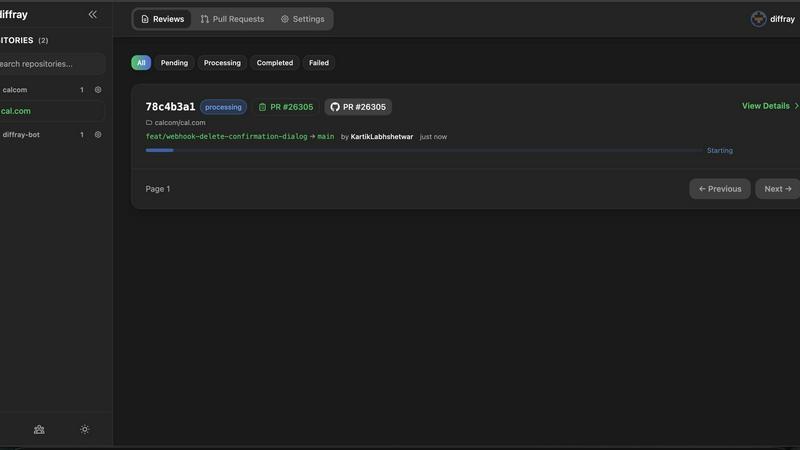
diffray
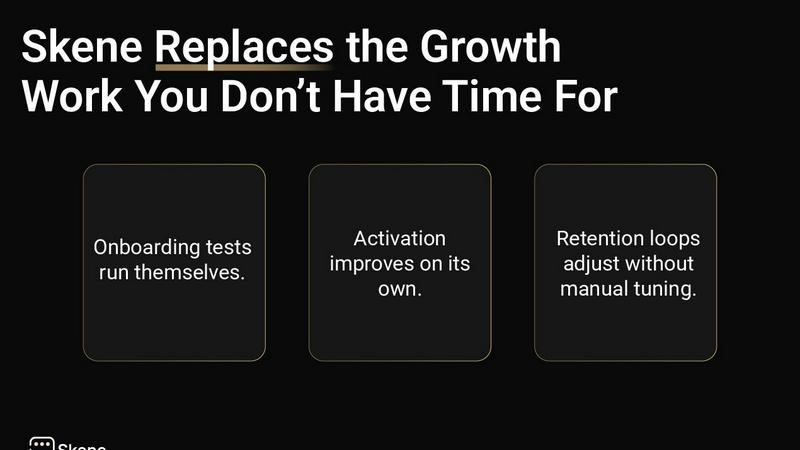
Skene
Feature Comparison
diffray
Multi-Agent Architecture
diffray's unique multi-agent architecture consists of over 30 specialized agents that focus on various code quality aspects. This ensures a comprehensive review process, catching potential issues without overwhelming developers with irrelevant feedback.
Accurate Issue Detection
With an astonishing 87% reduction in false positives, diffray ensures that developers can trust the feedback they receive. This accuracy leads to more efficient code reviews and allows teams to concentrate on genuine issues.
Rapid PR Review
By harnessing the power of diffray, organizations can reduce their PR review time from an average of 45 minutes to just 12 minutes per week. This remarkable efficiency allows development teams to maintain momentum and speed up their release cycles.
Enhanced Collaboration
diffray fosters collaboration among team members by providing clear and actionable feedback. This aids in aligning developers on best practices and encourages a culture of quality within the organization.
Skene
Codebase-Native Signal Detection
Skene connects directly to your GitHub or GitLab repository with read-only access, analyzing your codebase to automatically detect growth signals, user friction points, and activation opportunities. It understands your product's structure and user flows at the code level, eliminating the need for manual instrumentation or external tracking scripts. This provides a deep, contextual understanding of how users interact with your core product.
Autonomous Growth Loop Engine
The platform acts as a fully automated iteration engine. It doesn't just identify problems; it autonomously creates, tests, and deploys optimized versions of user flows for onboarding, activation, and retention. Your product's growth mechanisms continuously improve themselves based on real user data, turning your product into a self-optimizing growth engine without manual intervention from a dedicated team.
Prompt-Driven Growth Infrastructure
Growth starts with a single prompt. Skene provides a context layer for your AI, allowing you or your AI agent to command growth implementations directly from your IDE or terminal. You can analyze, audit, and implement changes through natural language prompts, making growth a programmable and version-controlled part of your development workflow, just like any other feature.
Owned & Version-Controlled Stack
Replace fragile third-party widgets and black-box scripts with code you own. Skene integrates growth directly into your tech stack, allowing you to version, prompt, and control all growth logic. This eliminates performance bottlenecks from external snippets, prevents data siloing, and ensures your growth infrastructure is as robust and maintainable as the rest of your application.
Use Cases
diffray
Streamlining Code Reviews
For development teams facing bottlenecks during the code review process, diffray offers a solution that streamlines reviews, allowing teams to maintain productivity without sacrificing code quality.
Improving Security Posture
Organizations looking to enhance their security measures can leverage diffray's specialized agents that focus on identifying security vulnerabilities, ensuring that code is not only functional but also secure.
Boosting Code Quality
Teams striving to improve overall code quality can utilize diffray to receive targeted feedback on best practices, thereby fostering a culture of excellence and continuous improvement within their development processes.
Accelerating Development Cycles
In fast-paced environments, diffray empowers development teams to accelerate their release cycles by reducing the time spent on code reviews, enabling quicker iterations and faster time-to-market for new features.
Skene
Automated Onboarding Flow Optimization
For teams drowning in manual tour creation and maintenance, Skene automatically generates and iterates onboarding flows by analyzing user behavior in your code. It identifies where users drop off and autonomously deploys better guidance, slashing time-to-value and boosting activation rates without a single line of manual tour code.
Self-Healing Customer Journeys
Stop worrying about UI overlays breaking after every deploy. Skene's code-native approach means all onboarding and lifecycle automation updates itself when you push new code. It continuously audits the user journey against your latest codebase, ensuring guidance and growth loops are always in sync with your live product.
Indie Hacker & Startup Scaling
Indie developers and early-stage startups can implement sophisticated, data-driven PLG strategies without a growth team. Skene acts as your "growth team in a box," enabling you to compete with larger players by systematically tightening activation funnels and improving retention, all while conserving critical resources and headcount.
AI-Agent Driven Development
Integrate growth directly into your AI-powered development workflow. Your AI agent can use Skene's context layer to analyze the codebase for growth opportunities and execute prompt-driven implementations. This allows for fully automated, intelligent iteration cycles where your AI assistant can directly ship growth improvements.
Overview
About diffray
diffray is a cutting-edge AI-driven code review tool that revolutionizes the traditional code review process. Unlike typical AI tools that depend on a singular model, diffray utilizes over 30 specialized agents, each meticulously tailored to examine critical aspects such as security, performance, bugs, best practices, and SEO. This innovative multi-agent architecture significantly reduces noise in pull requests (PRs), enabling development teams to focus on what truly matters. Users experience an impressive 87% reduction in false positives and a threefold increase in the identification of genuine issues. By implementing diffray, organizations can cut their PR review time from an average of 45 minutes to just 12 minutes per week. Suitable for teams of all sizes, diffray is designed to enhance code quality, promote collaboration, and accelerate development cycles, ensuring that projects remain robust, efficient, and high-performing.
About Skene
Skene is the AI-powered PLG (Product-Led Growth) infrastructure that transforms how products scale. It's a fully automated iteration engine designed to drive user growth without the need for a dedicated growth team. By connecting directly to your codebase and IDE, Skene observes real user actions to detect friction points and activation drop-offs. It then autonomously creates, tests, and deploys optimized versions of user flows for onboarding, activation, and retention. This means your product's growth mechanisms improve themselves continuously, based on a deep understanding of your actual customer code. Built for indie developers, early-stage startups, and established PLG companies, Skene acts as a "growth team in a box." It allows builders to offload growth work, tighten activation funnels, and expand customer lifetime value—all without adding headcount or managing brittle, third-party widgets. Its core promise is to make growth a native, ownable part of your tech stack that you can version, prompt, and control, ending reliance on external black-box scripts.
Frequently Asked Questions
diffray FAQ
What makes diffray different from other code review tools?
diffray stands out due to its multi-agent architecture that employs over 30 specialized agents focusing on various aspects of code quality, ensuring comprehensive and precise feedback without the noise often found in traditional tools.
How does diffray reduce false positives?
By utilizing a diverse range of specialized agents, diffray enhances the accuracy of issue detection, leading to an impressive 87% reduction in false positives, allowing developers to focus on genuine problems in their code.
Can diffray integrate with existing development tools?
Yes, diffray is designed to seamlessly integrate with popular development tools and platforms, making it easy for teams to incorporate it into their existing workflows without disrupting their processes.
Is diffray suitable for teams of all sizes?
Absolutely! diffray is designed to enhance code quality and collaboration for organizations of all sizes, from small startups to large enterprises, providing valuable insights regardless of team scale.
Skene FAQ
How is Skene different from traditional customer experience software?
Traditional tools require manual tour creation, constant maintenance, and rely on brittle UI overlays that break with every deploy. Skene is fundamentally different; it reads your codebase and automatically generates onboarding, analytics, and lifecycle automation. When you push code, Skene's systems update themselves, eliminating maintenance overhead and fragility.
How long does it take to set up?
Setup takes less than 60 seconds. You simply connect your GitHub or GitLab repository (read-only access is sufficient), and Skene automatically analyzes your codebase to generate PLG flows. No initial code changes, API modifications, or complex configuration is required to get started.
Is my code secure?
Absolutely. Security is a core principle. Skene only requires read-only access to your repository. All analysis happens in a secure, isolated environment. We do not store your source code, and the system is designed to respect your intellectual property and privacy at all times.
What kind of analytics do you provide?
Skene's dashboard provides real-time analytics on user progress, completion rates, and engagement metrics. It focuses on outcome-based insights like time-to-value and bottleneck identification, allowing you to measure the direct impact of optimizations and make data-driven decisions to improve your product-led growth loops.
Alternatives
diffray Alternatives
diffray is an advanced AI-driven code review tool designed to streamline the code review process by utilizing a multi-agent architecture. It focuses on enhancing code quality and reducing false positives, making it a vital asset for development teams aiming for efficiency and collaboration. Users often seek alternatives for various reasons, including pricing, feature sets, or specific platform compatibility that may better align with their unique workflows and requirements. When searching for an alternative, it's essential to consider the tool's ability to integrate seamlessly with existing systems, its scalability for team growth, and the accuracy of its feedback to ensure it meets your development needs.
Skene Alternatives
Skene is an AI-powered PLG infrastructure that automates product-led growth by turning your codebase into a self-optimizing engine. It belongs to the productivity and management category, specifically designed for developers and product teams who want to scale user growth autonomously. Users often explore alternatives for several reasons. These include budget constraints, specific feature needs not covered, or a preference for a different implementation model, such as manual control over fully autonomous systems. Platform compatibility and the desire for more traditional analytics versus AI-driven action are also common drivers. When evaluating options, focus on core capabilities. Look for solutions that deeply integrate with your development workflow, offer actionable insights beyond basic analytics, and provide clear ownership of the growth logic. The ideal tool should align with your team's technical stack and capacity, whether you need full automation or a more hands-on, collaborative approach.