HookMesh vs Hostim.dev
Side-by-side comparison to help you choose the right product.

Effortlessly ensure reliable webhook delivery with automatic retries and a self-service portal for your customers.
Last updated: February 26, 2026

Hostim.dev
Hostim.dev simplifies Docker app deployment with built-in databases on secure EU infrastructure for fast, predictable.
Last updated: March 1, 2026
Visual Comparison
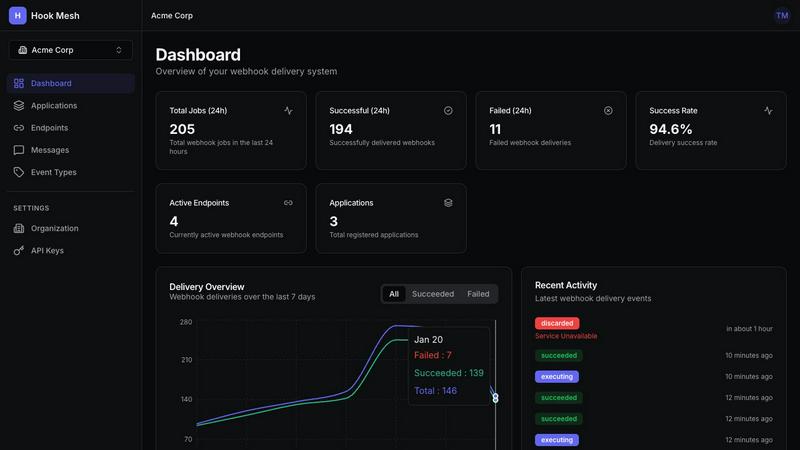
HookMesh
Hostim.dev
Feature Comparison
HookMesh
Reliable Delivery
HookMesh guarantees that webhooks are delivered without fail. It boasts automatic retries with exponential backoff and jitter, ensuring that messages are sent and re-sent for up to 48 hours if necessary. The included circuit breaker feature automatically disables failing endpoints, allowing for smooth recovery and uninterrupted service.
Customer Portal
The embeddable customer portal provides a self-service interface that allows users to manage their webhook endpoints effortlessly. Customers can view detailed delivery logs, monitor the status of their webhooks, and replay failed deliveries with just a single click, enhancing their overall experience.
Developer Experience
HookMesh is designed for efficiency, enabling developers to ship webhooks in minutes. With a comprehensive REST API and official SDKs for JavaScript, Python, and Go, integrating HookMesh into existing applications is a breeze. Developers can send webhook events with just a few lines of code, allowing them to focus on building great products.
One-Click Replay
When a webhook fails, the last thing users want is to waste time troubleshooting. HookMesh's one-click replay feature allows users to retry failed deliveries instantly, eliminating the frustration of manual retries and ensuring that critical events are not missed.
Hostim.dev
Easy Deployment with Docker and Git
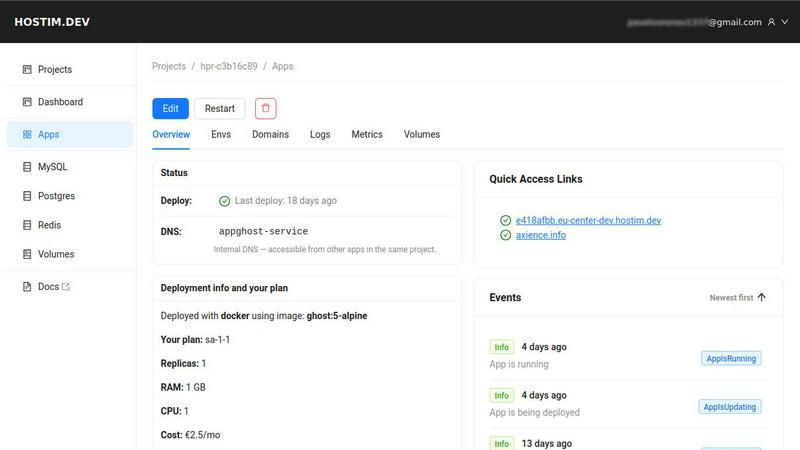
Deploy your applications effortlessly using Docker images, Git repositories, or Docker Compose files. This streamlined process eliminates the need for extensive DevOps expertise, allowing developers to focus on building and innovating.
Built-in Managed Databases
Hostim.dev offers built-in managed databases like MySQL, PostgreSQL, and Redis, provisioned instantly to support your applications. This feature ensures that you have the necessary data storage solutions readily available, enhancing development speed and reliability.
Scalable Resources in Real-Time
Scale your CPU and RAM resources directly from the user interface without experiencing any downtime. This flexibility allows you to adapt to changing demands and ensures optimal performance for your applications.
Transparent and Predictable Pricing
With pricing starting as low as €2.50 per month, Hostim.dev offers flat, per-project billing with no hidden fees. This transparency allows developers and agencies to provide clear cost estimates to clients and manage budgets effectively.
Use Cases
HookMesh
E-commerce Order Notifications
For online retailers, timely order notifications are crucial. With HookMesh, e-commerce platforms can reliably send order status updates to customers, ensuring they are always informed about their purchases. This leads to improved customer satisfaction and transparency throughout the shopping experience.
SaaS Application Integrations
SaaS applications often rely on webhooks for integrations with other services. HookMesh simplifies this process, ensuring that webhook events are delivered reliably to various endpoints, allowing businesses to create seamless connections between their services and those of their partners.
Real-Time Analytics Updates
Businesses that depend on real-time data analysis can leverage HookMesh to deliver critical updates without delay. Whether it’s sending alerts for significant changes in metrics or user activity, HookMesh ensures that data is consistently delivered, enabling timely decision-making and action.
Incident Alerts for IT Operations
For IT teams managing complex infrastructures, incident alerts via webhooks are essential for rapid response. HookMesh provides a dependable solution for delivering these alerts, ensuring that teams can react swiftly to issues and maintain operational integrity.
Hostim.dev
Freelancers Accelerating Project Delivery
Freelancers can leverage Hostim.dev to quickly deploy applications for clients without getting bogged down by infrastructure management. The platform’s simplicity means they can focus on delivering high-quality projects faster.
Agencies Managing Multiple Clients
Agencies can use Hostim.dev to create isolated environments for each client, ensuring that projects remain separate and secure. This feature also facilitates clear cost tracking and billing for each project, enhancing client transparency.
Students Gaining Practical Experience
Students can utilize Hostim.dev to learn about real-world application deployment and infrastructure management. The free trial and student credits enable them to work on projects that can be showcased in their portfolios.
Startups Launching MVPs
Startups can quickly launch their Minimum Viable Products (MVPs) using Hostim.dev’s efficient deployment processes. With built-in databases and reliable performance, startups can validate their ideas without heavy upfront costs.
Overview
About HookMesh
HookMesh is an innovative platform designed to revolutionize webhook delivery for modern SaaS products. By addressing the inherent complexities of in-house webhook development, such as retry logic, circuit breakers, and debugging, HookMesh empowers businesses to focus on their core offerings without getting bogged down in technical challenges. This robust solution provides a battle-tested infrastructure, ensuring reliable and consistent delivery through automatic retries, exponential backoff, and idempotency keys. Ideal for developers and product teams, HookMesh streamlines webhook management, allowing for an enhanced customer experience. With a self-service portal, users can easily manage endpoints, gain visibility into delivery logs, and effortlessly replay failed webhooks, making HookMesh the go-to solution for organizations seeking a reliable webhook strategy.
About Hostim.dev
Hostim.dev is a state-of-the-art bare-metal Platform-as-a-Service (PaaS) designed specifically for developers who want to deploy containerized applications quickly and efficiently without the burden of complex DevOps management. This innovative platform allows you to launch applications in minutes by utilizing Docker images, Git repositories, or comprehensive Docker Compose files. Hostim.dev intelligently provisions and connects vital services such as MySQL, PostgreSQL, and Redis, creating a seamless experience for users. Each project is isolated within its own Kubernetes namespace, providing enhanced security and performance. With transparent hourly billing and GDPR-compliant hosting based in Germany, Hostim.dev appeals to a wide range of users, including freelancers, startups, agencies, and educational institutions. The platform empowers developers to concentrate on creating groundbreaking applications while enjoying predictable costs and robust operational performance.
Frequently Asked Questions
HookMesh FAQ
How does HookMesh handle retries?
HookMesh employs automatic retries with an exponential backoff strategy, meaning that failed webhook deliveries will be retried progressively over a period of up to 48 hours, ensuring that no event is lost.
Is there a free tier available?
Yes, HookMesh offers a free tier that includes 5,000 webhooks per month with no credit card required. This allows users to test the platform and its features without any upfront costs.
Can I manage my endpoints with HookMesh?
Absolutely! HookMesh provides an embeddable customer portal that allows users to manage their webhook endpoints easily. They can view logs, add new endpoints, and replay failed webhooks with one click.
What programming languages are supported with HookMesh SDKs?
HookMesh offers official SDKs for JavaScript, Python, and Go, enabling developers to integrate webhook functionality into their applications seamlessly and efficiently.
Hostim.dev FAQ
What does the free tier include?
The free tier offers a 5-day trial with no credit card required, allowing users to explore Hostim.dev’s features, including application deployment and managed databases.
Can I deploy with just a Compose file?
Yes, Hostim.dev supports deployment directly from Docker Compose files. Simply paste your Compose file and launch your application in minutes without any additional configurations.
Where is my app hosted?
Your applications are hosted on bare-metal servers located in Germany, ensuring GDPR compliance and data sovereignty within the European Union.
Do I need to know Kubernetes?
No, you do not need to have Kubernetes knowledge to use Hostim.dev. The platform abstracts the complexities of Kubernetes, allowing you to focus on your applications without needing DevOps expertise.
Alternatives
HookMesh Alternatives
HookMesh is a cutting-edge solution designed to streamline webhook delivery for SaaS products, eliminating the complexities associated with in-house webhook management. Users often seek alternatives due to factors such as pricing, specific feature requirements, and varying platform needs. By exploring alternatives, businesses can ensure they find a solution that aligns perfectly with their operational goals and budget constraints. When choosing an alternative to HookMesh, it's essential to consider the reliability of webhook delivery, the ease of use in managing endpoints, and the availability of robust customer support. Additionally, the ability to handle retries, monitor delivery logs, and provide a seamless experience for end-users should be top priorities. A comprehensive evaluation of features and pricing can lead to the best decision for your business's webhook strategy.
Hostim.dev Alternatives
Hostim.dev is a state-of-the-art bare-metal Platform-as-a-Service (PaaS) designed for developers who want to deploy containerized applications effortlessly. By harnessing the power of Docker and Kubernetes, it enables rapid application deployment while relieving users from the burdensome DevOps overhead. However, users often seek alternatives for various reasons, including pricing structures, specific feature sets, and unique platform requirements that may better suit their projects. When exploring alternatives, it's essential to consider several factors, such as ease of use, the range of integrated services, scalability options, and compliance with regulations like GDPR. Additionally, ensure that any alternative provides robust performance, transparent billing practices, and strong security measures, allowing developers to focus on innovation without the hassle of managing underlying infrastructure.