Job Boardly vs Miget
Side-by-side comparison to help you choose the right product.

Job Boardly
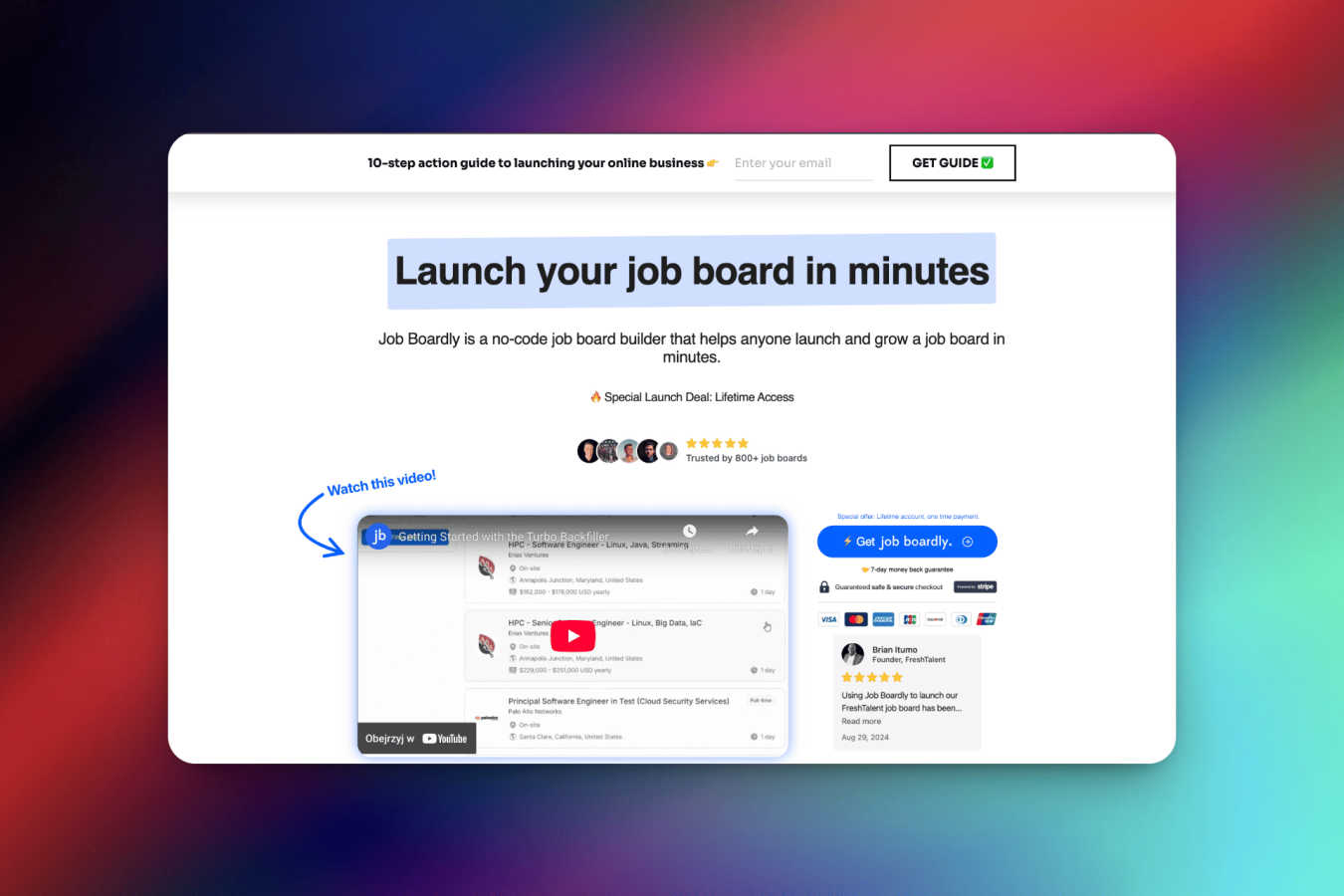
Effortlessly launch and grow your niche job board with Job Boardly's powerful no-code platform and automation tools.
Last updated: March 1, 2026

Miget
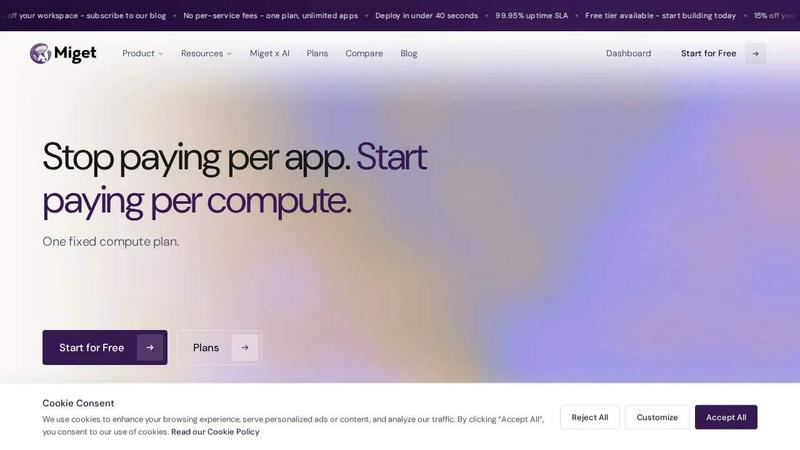
Miget deploys unlimited apps on one flat-rate plan, eliminating per-service fees for predictable, scalable hosting.
Last updated: April 13, 2026
Visual Comparison
Job Boardly
Miget
Feature Comparison
Job Boardly
Paywall
The paywall feature allows job board owners to monetize their listings by restricting access to premium job postings. Users can browse a limited range of jobs for free, but full access to premium listings requires a paid subscription, thus offering a sustainable revenue model.
Job Backfiller
Job Backfiller automatically enriches your job board with relevant job listings, making it easier for job seekers to find opportunities. By using either Turbo Backfiller or Magic Aggregator, users can customize backfill options based on categories, countries, and keywords.
Job Aggregator
With Job Aggregator, users can automatically import jobs from multiple career sites using a tailored import tool. This feature broadens job availability and enhances the relevance of listings, ensuring your job board remains competitive and comprehensive.
No-Code Solution
Job Boardly provides a true no-code experience, allowing users to launch their job boards without writing a single line of code. This user-friendly approach empowers anyone, regardless of technical skills, to create a professional job board quickly and efficiently.
Miget
Unlimited Services Per Plan
Miget's core innovation is its billing model. You select a compute plan based on the resources you need (CPU, RAM), and then you can deploy as many applications, PostgreSQL databases, Redis instances, and background workers as that plan can handle. There are absolutely no per-service fees. This eliminates the financial penalty for architectural experimentation, creating new microservices, or spinning up preview environments, allowing for true agile development.
GitHub-Native Deployments & Preview Apps
Connect your GitHub repository and Miget handles the entire deployment pipeline automatically. Every push to your main branch triggers a production deployment. Crucially, every pull request automatically generates a full-stack preview environment with its own unique URL, complete with its own app instance and database clone. This enables seamless testing and review cycles without any manual configuration or extra cost.
Managed Data Services Inside Compute
Forget about provisioning and paying for databases separately. Miget includes managed data services like PostgreSQL, MySQL, and Valkey (Redis-compatible) directly within your compute plan. These are fully isolated, production-ready databases that consume resources from your overall allocation, not your wallet. This simplifies your stack and keeps your monthly bill predictable and consolidated.
Full-Stack Cloning & Instant Redeploys
Miget empowers rapid development and testing with one-click full-stack cloning. Duplicate an entire application environment—including its code, database, and live data—in a single action to create staging areas or test new features. Combined with intelligent build caches (Migetpacks) that auto-detect your tech stack, this enables incredibly fast, sub-40-second redeploys, maximizing developer velocity.
Use Cases
Job Boardly
Entrepreneurial Job Boards
Entrepreneurs looking to carve out a niche can leverage Job Boardly to create tailored job boards for specific industries or professions. This allows them to connect job seekers with employers in a focused environment.
Community-Based Job Boards
Niche community leaders can utilize Job Boardly to establish job boards that cater to their specific audiences. By providing a platform for community members to share job postings, they enhance job visibility within their networks.
Recruitment Agencies
Recruiters can streamline their hiring processes by setting up custom job boards that showcase their clients' job openings. This allows them to manage listings efficiently while offering a branded experience to candidates.
Educational Institutions
Schools and universities can create job boards to help students and alumni find internships and job opportunities. This not only supports career development but also strengthens the institution's relationship with its students.
Miget
Indie Hackers & Solo Developers
For bootstrappers and solo founders, Miget is the ultimate launchpad. It provides a complete, production-ready PaaS (app, database, cache) with a single, predictable monthly bill. The free tier and low-cost plans allow for shipping MVPs fast without upfront cost anxiety. GitHub push-to-deploy simplifies the workflow, letting the developer focus purely on building their product.
Growing Engineering Teams
Teams transitioning from a monolith to microservices or scaling their feature output benefit immensely. Miget allows them to deploy new services, preview environments, and workers freely within their existing compute budget. Features like team roles, audit logs, and autoscaling within the fixed cost allocation enable scaling without platform friction or exponential cost increases.
AI-Powered Development & Prototyping
Developers leveraging AI coding assistants can ship generated code instantly with Miget. The platform supports deploying from prompts without deep Git knowledge, and features like skills.md allow for one-click infrastructure setup. Instant preview URLs make it easy to share and validate AI-built prototypes with stakeholders in real-time.
Enterprise Development & Compliance
For larger organizations, Miget offers the control and compliance required for enterprise-grade workloads. It supports bringing your own cloud (BYOC) or bare metal, and provides tools like Helm charts, Terraform modules, and custom orchestration. Dedicated support, strict SLAs, and compliance tooling allow enterprises to leverage the simplified model without sacrificing security or governance.
Overview
About Job Boardly
Job Boardly is a groundbreaking platform tailored for individuals and organizations eager to create and manage their custom job boards with ease. Designed for entrepreneurs, recruiters, and niche community leaders, Job Boardly simplifies the job board creation process, enabling users to launch a fully functional site in mere minutes—no coding required. This innovative solution stands out from traditional job board platforms that often come with hefty price tags and complex setups. With Job Boardly, users can focus on forging connections between job seekers and employers. Key features like Turbo Backfiller, Magic Aggregator, and built-in monetization tools empower users to not only launch quickly but also scale effectively as their needs grow. With a user-friendly interface, limitless customization options, and seamless integrations, Job Boardly makes job board management accessible to everyone, regardless of technical expertise.
About Miget
Miget is a revolutionary Platform-as-a-Service (PaaS) that shatters the traditional, punitive pricing model of cloud hosting. Instead of charging you separately for every app, database, and background worker, Miget introduces a simple, predictable paradigm: you pay for a fixed block of compute power, and then deploy an unlimited number of services within that allocation. This model is built for developers and teams who prioritize agility, cost predictability, and efficiency. Whether you're a solo indie hacker prototyping an idea, a growing startup scaling a microservices architecture, or an enterprise needing robust, isolated infrastructure, Miget delivers. It combines the raw power and affordability of managing your own VPS with the sublime, zero-configuration developer experience of platforms like Heroku. With features like GitHub-native deploys under 40 seconds, managed databases included in your plan, full-stack preview environments for every pull request, and a 99.95% uptime SLA, Miget ensures you can build, experiment, and scale your applications without the fear of billing surprises or operational complexity. Stop budgeting for infrastructure and start building what's next.
Frequently Asked Questions
Job Boardly FAQ
Can I customize the appearance of my job board to match my brand?
Absolutely! Job Boardly offers extensive customization options, allowing users to personalize their job boards with logos, colors, and other branding elements, ensuring a cohesive look that aligns with their brand identity.
Can I connect my own domain?
Yes, Job Boardly makes it simple to connect your own domain to your job board. This quick process helps maintain your brand's identity and professionalism, making your job board easily recognizable to users.
How can I backfill jobs on my board using Job Boardly?
Job Boardly features an automatic backfill capability that enriches your job listings with content from various sources. Customize backfilling by categories, countries, or keywords, and choose from tools like the Magic Aggregator and Turbo Backfiller.
How do backfiller credits work?
Backfill credits can be purchased directly within the app, starting at $0.009 per API credit. These credits are required for using the Turbo Backfiller and Magic Aggregator services, providing access to over 7 million active job listings.
Miget FAQ
How does the pricing work compared to traditional PaaS?
Traditional PaaS platforms charge you separately for each component: a web dyno, a worker dyno, a database, a cache, etc. This leads to complex, escalating bills. Miget flips this: you pay for a fixed compute plan (e.g., a set amount of CPU and RAM). Inside that plan, you can run an unlimited number of apps, databases, and workers at no additional cost. You pay for capacity, not components, leading to one predictable monthly invoice.
What is included in the "unlimited services"?
Within the resource limits (CPU/RAM) of your chosen compute plan, you can deploy an unlimited number of any service Miget supports. This includes web applications, background worker processes, managed PostgreSQL/MySQL databases, Valkey (Redis) instances, and preview environments for every pull request. There are no hidden per-service fees for any of these.
How fast and reliable are deployments?
Miget is engineered for speed and reliability. The average deployment time is under 40 seconds, thanks to intelligent build caches (Migetpacks) that auto-detect your stack. The platform offers a 99.95% uptime Service Level Agreement (SLA), ensuring your applications and data services maintain high availability, making it production-ready from day one.
Is there a free tier or trial?
Yes, Miget offers a free tier that allows you to start building and deploying applications at no cost. This is perfect for testing the platform, prototyping new ideas, or running small side projects. You can upgrade to a paid compute plan whenever you need more resources for production workloads.
Alternatives
Job Boardly Alternatives
Job Boardly is a leading no-code platform that empowers users to effortlessly launch and manage their own niche job boards. It streamlines the process of connecting job seekers with employers, making it accessible for everyone, from entrepreneurs to recruiters. As users explore their options, many seek alternatives due to various factors such as pricing, specific features that align better with their needs, or the desire for different platform capabilities that may enhance their job board experience. When searching for alternatives, users should consider essential aspects like user-friendliness, the availability of monetization options, and integration capabilities with other tools they may be using. It's also crucial to assess the scalability of the platform to ensure it can grow alongside the evolving needs of the job board community.
Miget Alternatives
Miget is a modern platform-as-a-service (PaaS) solution that redefines value by offering a flat-rate compute plan. It falls within the low-code/no-code and cloud deployment space, focusing on simplifying infrastructure management. Users get a fixed pool of resources to deploy an unlimited number of apps, databases, and workers, moving away from the traditional per-service billing model. People explore alternatives for various reasons. The primary driver is often cost structure, seeking to avoid unpredictable bills that scale with every new microservice. Others might need specific integrations, advanced developer tooling, or different levels of hands-on infrastructure control that a particular platform may not offer. Platform lock-in and specific compliance or regional requirements also lead to evaluation. When assessing other platforms, focus on your core needs. Scrutinize the pricing model—is it transparent and predictable? Evaluate the deployment workflow and developer experience. Ensure it supports your required runtimes, data services, and has robust security and isolation guarantees. The goal is to match a platform's strengths with your project's scale, complexity, and team's workflow.