Mod vs qtrl.ai
Side-by-side comparison to help you choose the right product.

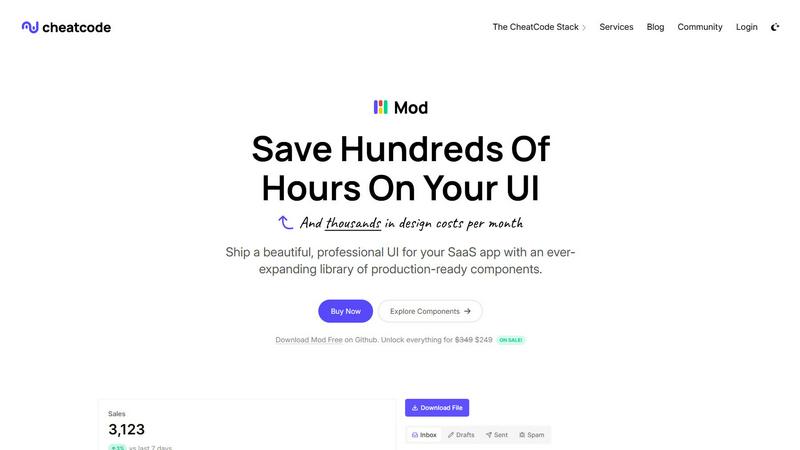
Mod is a CSS framework to build and ship SaaS application interfaces with speed.

qtrl.ai
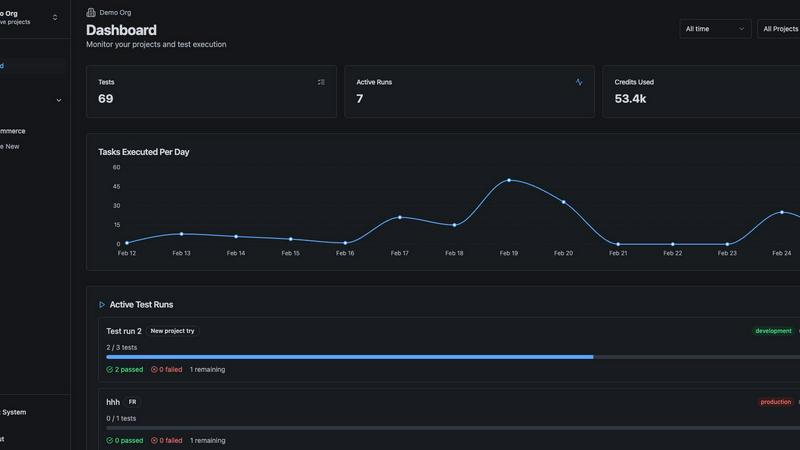
qtrl.ai empowers QA teams to scale testing with AI agents while maintaining full control and governance for optimal.
Last updated: March 4, 2026
Visual Comparison
Mod
qtrl.ai
Feature Comparison
Mod
Extensive Component Library
Mod ships with a vast library of 88+ ready-to-use components, covering everything from complex data tables and interactive forms to navigation bars, modals, and stat cards. Each component is built with accessibility and semantic HTML in mind, ensuring a solid foundation. This eliminates the need to build and style these common UI elements from scratch, saving countless hours of development time and ensuring consistency across your entire application interface.
Framework-Agnostic Flexibility
Unlike CSS frameworks tied to a specific JavaScript ecosystem, Mod is designed to work anywhere. It provides clean, utility-based CSS classes that you can apply in any tech stack, including Next.js, Nuxt, Vite, Svelte, Ruby on Rails, and Django. This future-proofs your investment and gives your team the freedom to adopt new technologies without abandoning your UI system. Simply drop Mod's stylesheet into your project and start building.
Complete Theming & Dark Mode
Mod includes two professionally designed themes (light and dark) out of the box, with full support for automatic dark mode detection and toggling. The theming system is built with CSS custom properties, making it incredibly simple to customize primary colors, spacing, typography, and more to match your brand identity. This allows you to achieve a premium, polished look with minimal effort and provide a modern user experience that meets today's expectations.
Icon System & Responsive Design
Accelerate your workflow further with integrated access to over 1,500+ icons, covering a wide range of use cases for SaaS applications. Every component and layout in Mod is built with a mobile-first, fully responsive approach. Your interfaces will automatically adapt and look flawless on devices of all sizes, from desktop monitors to mobile phones, without requiring you to write custom media queries.
qtrl.ai
Autonomous QA Agents
qtrl.ai's autonomous QA agents execute testing instructions either on demand or continuously, ensuring flexibility in testing cycles. These agents can operate at scale across multiple environments while adhering to user-defined rules, providing real browser execution instead of mere simulations for reliable results.
Enterprise-Grade Test Management
With qtrl.ai, teams benefit from centralized management of test cases, plans, and runs. This feature includes full traceability and audit trails, enabling both manual and automated workflows that are designed to meet compliance and audit requirements seamlessly.
Progressive Automation
Users can initiate testing with human-written instructions and progressively transition to AI-generated tests when they are ready. qtrl.ai further enhances this process by suggesting new tests based on coverage gaps, ensuring teams can continuously improve their testing strategies.
Adaptive Memory
The adaptive memory feature builds a living knowledge base of the application, learning from exploration, test execution, and identified issues. This capability powers smarter, context-aware test generation that becomes more effective with each interaction, enhancing overall testing efficiency.
Use Cases
Mod
Rapid SaaS Prototyping & MVP Development
For founders and solo developers validating an idea, speed is everything. Mod allows you to transform a concept into a functional, professional-looking prototype or Minimum Viable Product in days, not weeks. By using the pre-built components and layouts, you can assemble a convincing UI that focuses user testing on functionality and flow, not on visual design details, allowing for faster iteration and feedback cycles.
Streamlining Team-Based Development
In team environments, inconsistent UI can create friction and slow down progress. Mod serves as a single source of truth for your application's visual design. Developers can pull from the same component library, ensuring that every new feature or page adheres to the same design standards without constant back-and-forth with a designer, leading to more predictable shipping schedules and a cohesive final product.
Modernizing Legacy Application UIs
Revamping the user interface of an older application can be a daunting, resource-intensive project. Mod can be incrementally adopted into existing codebases, regardless of their framework. Teams can systematically replace outdated UI sections with Mod's modern components, achieving a visual refresh and improved user experience without a risky, full-scale rewrite of the application.
Building Internal Tools & Admin Panels
Internal dashboards and admin interfaces are crucial for operations but often don't justify a large design budget. Mod is perfect for these projects, providing all the complex data visualization components, form controls, and layout structures needed to build powerful, intuitive internal tools quickly. You get a clean, professional interface that improves team productivity without the overhead.
qtrl.ai
Scaling QA Efforts
qtrl.ai is perfect for QA teams looking to scale their testing efforts beyond manual processes. By employing both traditional and automated testing strategies, teams can effectively manage increased workloads without compromising quality.
Modernizing Legacy Workflows
Companies looking to upgrade legacy QA workflows can leverage qtrl.ai’s innovative features to transition smoothly into modern testing practices. The platform supports integration with existing tools, making it easier to adopt new methodologies without disruption.
Ensuring Compliance and Governance
For enterprises that require stringent compliance and traceability, qtrl.ai provides the necessary governance features. With detailed audit trails and permissioned autonomy levels, teams can maintain control over their testing processes while meeting regulatory demands.
Enhancing Product Development Speed
Product-led engineering teams can utilize qtrl.ai to accelerate their development cycles. By automating the testing process and gaining real-time insights into quality metrics, teams can respond faster to market changes and customer needs, ensuring a competitive edge.
Overview
About Mod
Mod is the high-velocity CSS framework engineered for shipping polished, production-ready SaaS user interfaces at breakneck speed. It eliminates the design bottleneck for developers by providing a comprehensive, battle-tested system of visual primitives. Think of it as your entire UI design department, distilled into a single, lightweight package. Built for solo founders, startups, and agile development teams, Mod's core value proposition is ruthless efficiency: stop wrestling with custom CSS, debating design tokens, or rebuilding common components. With over 88 meticulously crafted components, 168 style variants, and full theming support, you get a complete visual language out of the box. This allows you to focus entirely on application logic and user experience, dramatically reducing time-to-market and the costs associated with custom design work. Its framework-agnostic nature means it seamlessly integrates into your existing stack, whether you're working with Next.js, SvelteKit, Rails, or any other modern toolchain.
About qtrl.ai
qtrl.ai is an innovative QA platform that empowers software teams to enhance their quality assurance processes without sacrificing oversight or governance. Tailored for product-led engineering teams, QA departments transitioning from manual to automated testing, and enterprises with stringent compliance requirements, qtrl.ai seamlessly integrates enterprise-grade test management with advanced AI-driven automation. Its central hub allows teams to organize test cases, plan test runs, trace requirements, and monitor quality metrics through dynamic, real-time dashboards. This structured environment ensures complete transparency regarding testing coverage, pass rates, and potential risks. Unlike traditional automation tools that often complicate processes, qtrl.ai introduces intelligent automation incrementally, allowing teams to start with straightforward manual testing and scale to autonomous agents that generate and maintain UI tests from plain English descriptions. Ultimately, qtrl.ai bridges the gap between the slow, meticulous nature of manual testing and the complexities of traditional automation, ensuring a trusted pathway to faster and smarter quality assurance.
Frequently Asked Questions
Mod FAQ
What makes Mod different from Tailwind CSS or Bootstrap?
While Tailwind is a utility-first framework requiring you to construct components, Mod is component-first. You get complete, pre-assembled UI blocks (like dashboards, settings panels, etc.) that are ready to use immediately. Compared to Bootstrap, Mod is specifically tailored for the aesthetic and functional needs of modern SaaS applications, with more sophisticated components and a cleaner, less generic design out of the box.
Is Mod compatible with React/Vue/Svelte?
Absolutely. Mod is framework-agnostic. It is built with plain, semantic CSS. You can use its CSS classes directly in your React JSX, Vue templates, or Svelte components. There are no framework-specific bindings or dependencies, giving you maximum flexibility and avoiding vendor lock-in to any particular JavaScript ecosystem.
How easy is it to customize the themes and colors?
Customization is straightforward. Mod's visual style is controlled entirely through CSS custom properties (variables). You can override the core color palette, typography scales, spacing units, and more by simply defining your own values in a separate stylesheet. This allows for deep branding integration while maintaining all the structural benefits of the component system.
What is included in the yearly updates?
Your license includes access to all updates and new components released for one year from purchase. The CheatCode team continuously expands the library, refines existing components, and adds new features based on modern web standards and community feedback. This ensures your UI toolkit remains current and continues to save you time as web development practices evolve.
qtrl.ai FAQ
What types of organizations can benefit from qtrl.ai?
qtrl.ai is designed for a variety of organizations, including product-led engineering teams, QA groups transitioning from manual testing, and enterprises with strict compliance and auditing requirements. Its flexible features cater to diverse needs.
How does qtrl.ai ensure compliance and governance?
qtrl.ai offers enterprise-grade test management that includes full traceability, audit trails, and permissioned autonomy levels. This ensures that teams can maintain control and meet compliance standards while executing their testing strategies.
Can qtrl.ai integrate with existing tools?
Yes, qtrl.ai is built to work seamlessly with your existing tools, facilitating the integration of requirements management and CI/CD pipelines. This adaptability allows teams to modernize their workflows without overhauling their current systems.
What makes qtrl.ai different from traditional automation tools?
Unlike traditional automation tools that often present a brittle and expensive approach, qtrl.ai introduces automation progressively. It allows teams to start with manual testing and gradually adopt AI-driven features, maintaining control and oversight throughout the process.