Mod vs Skene
Side-by-side comparison to help you choose the right product.
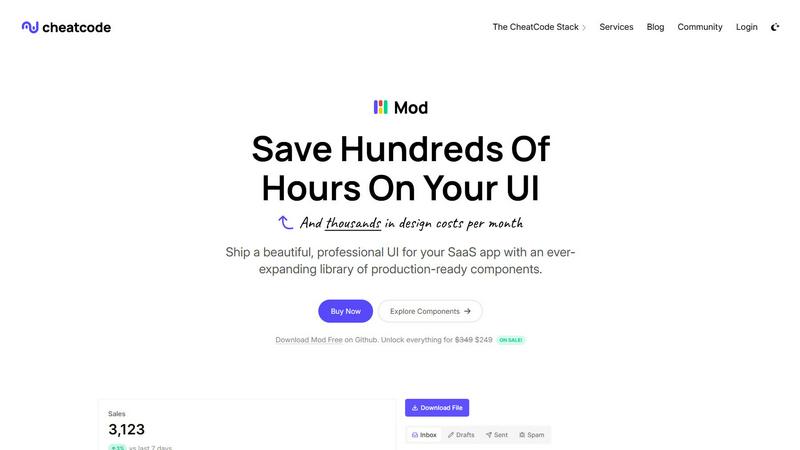
Mod is a CSS framework to build and ship SaaS application interfaces with speed.

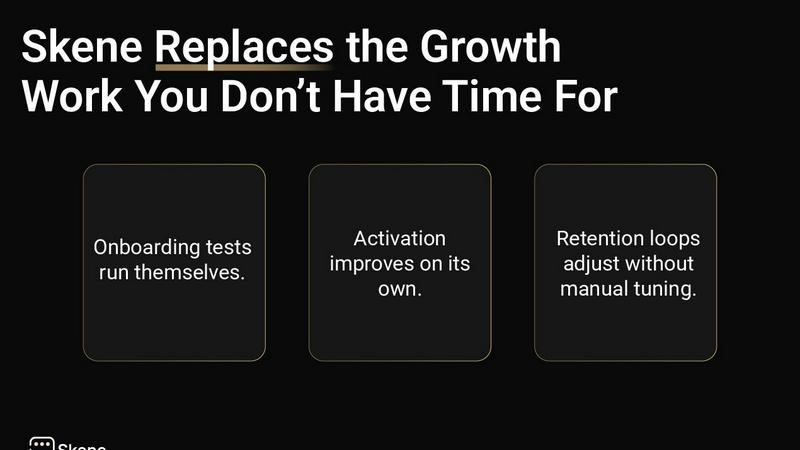
Skene turns your codebase into AI-driven growth prompts you own and control.
Last updated: February 28, 2026
Visual Comparison
Mod
Skene
Feature Comparison
Mod
Extensive Component Library
Mod ships with a vast library of 88+ ready-to-use components, covering everything from complex data tables and interactive forms to navigation bars, modals, and stat cards. Each component is built with accessibility and semantic HTML in mind, ensuring a solid foundation. This eliminates the need to build and style these common UI elements from scratch, saving countless hours of development time and ensuring consistency across your entire application interface.
Framework-Agnostic Flexibility
Unlike CSS frameworks tied to a specific JavaScript ecosystem, Mod is designed to work anywhere. It provides clean, utility-based CSS classes that you can apply in any tech stack, including Next.js, Nuxt, Vite, Svelte, Ruby on Rails, and Django. This future-proofs your investment and gives your team the freedom to adopt new technologies without abandoning your UI system. Simply drop Mod's stylesheet into your project and start building.
Complete Theming & Dark Mode
Mod includes two professionally designed themes (light and dark) out of the box, with full support for automatic dark mode detection and toggling. The theming system is built with CSS custom properties, making it incredibly simple to customize primary colors, spacing, typography, and more to match your brand identity. This allows you to achieve a premium, polished look with minimal effort and provide a modern user experience that meets today's expectations.
Icon System & Responsive Design
Accelerate your workflow further with integrated access to over 1,500+ icons, covering a wide range of use cases for SaaS applications. Every component and layout in Mod is built with a mobile-first, fully responsive approach. Your interfaces will automatically adapt and look flawless on devices of all sizes, from desktop monitors to mobile phones, without requiring you to write custom media queries.
Skene
Codebase-Native Signal Detection
Skene connects directly to your GitHub or GitLab repository with read-only access, analyzing your codebase to automatically detect growth signals, user friction points, and activation opportunities. It understands your product's structure and user flows at the code level, eliminating the need for manual instrumentation or external tracking scripts. This provides a deep, contextual understanding of how users interact with your core product.
Autonomous Growth Loop Engine
The platform acts as a fully automated iteration engine. It doesn't just identify problems; it autonomously creates, tests, and deploys optimized versions of user flows for onboarding, activation, and retention. Your product's growth mechanisms continuously improve themselves based on real user data, turning your product into a self-optimizing growth engine without manual intervention from a dedicated team.
Prompt-Driven Growth Infrastructure
Growth starts with a single prompt. Skene provides a context layer for your AI, allowing you or your AI agent to command growth implementations directly from your IDE or terminal. You can analyze, audit, and implement changes through natural language prompts, making growth a programmable and version-controlled part of your development workflow, just like any other feature.
Owned & Version-Controlled Stack
Replace fragile third-party widgets and black-box scripts with code you own. Skene integrates growth directly into your tech stack, allowing you to version, prompt, and control all growth logic. This eliminates performance bottlenecks from external snippets, prevents data siloing, and ensures your growth infrastructure is as robust and maintainable as the rest of your application.
Use Cases
Mod
Rapid SaaS Prototyping & MVP Development
For founders and solo developers validating an idea, speed is everything. Mod allows you to transform a concept into a functional, professional-looking prototype or Minimum Viable Product in days, not weeks. By using the pre-built components and layouts, you can assemble a convincing UI that focuses user testing on functionality and flow, not on visual design details, allowing for faster iteration and feedback cycles.
Streamlining Team-Based Development
In team environments, inconsistent UI can create friction and slow down progress. Mod serves as a single source of truth for your application's visual design. Developers can pull from the same component library, ensuring that every new feature or page adheres to the same design standards without constant back-and-forth with a designer, leading to more predictable shipping schedules and a cohesive final product.
Modernizing Legacy Application UIs
Revamping the user interface of an older application can be a daunting, resource-intensive project. Mod can be incrementally adopted into existing codebases, regardless of their framework. Teams can systematically replace outdated UI sections with Mod's modern components, achieving a visual refresh and improved user experience without a risky, full-scale rewrite of the application.
Building Internal Tools & Admin Panels
Internal dashboards and admin interfaces are crucial for operations but often don't justify a large design budget. Mod is perfect for these projects, providing all the complex data visualization components, form controls, and layout structures needed to build powerful, intuitive internal tools quickly. You get a clean, professional interface that improves team productivity without the overhead.
Skene
Automated Onboarding Flow Optimization
For teams drowning in manual tour creation and maintenance, Skene automatically generates and iterates onboarding flows by analyzing user behavior in your code. It identifies where users drop off and autonomously deploys better guidance, slashing time-to-value and boosting activation rates without a single line of manual tour code.
Self-Healing Customer Journeys
Stop worrying about UI overlays breaking after every deploy. Skene's code-native approach means all onboarding and lifecycle automation updates itself when you push new code. It continuously audits the user journey against your latest codebase, ensuring guidance and growth loops are always in sync with your live product.
Indie Hacker & Startup Scaling
Indie developers and early-stage startups can implement sophisticated, data-driven PLG strategies without a growth team. Skene acts as your "growth team in a box," enabling you to compete with larger players by systematically tightening activation funnels and improving retention, all while conserving critical resources and headcount.
AI-Agent Driven Development
Integrate growth directly into your AI-powered development workflow. Your AI agent can use Skene's context layer to analyze the codebase for growth opportunities and execute prompt-driven implementations. This allows for fully automated, intelligent iteration cycles where your AI assistant can directly ship growth improvements.
Overview
About Mod
Mod is the high-velocity CSS framework engineered for shipping polished, production-ready SaaS user interfaces at breakneck speed. It eliminates the design bottleneck for developers by providing a comprehensive, battle-tested system of visual primitives. Think of it as your entire UI design department, distilled into a single, lightweight package. Built for solo founders, startups, and agile development teams, Mod's core value proposition is ruthless efficiency: stop wrestling with custom CSS, debating design tokens, or rebuilding common components. With over 88 meticulously crafted components, 168 style variants, and full theming support, you get a complete visual language out of the box. This allows you to focus entirely on application logic and user experience, dramatically reducing time-to-market and the costs associated with custom design work. Its framework-agnostic nature means it seamlessly integrates into your existing stack, whether you're working with Next.js, SvelteKit, Rails, or any other modern toolchain.
About Skene
Skene is the AI-powered PLG (Product-Led Growth) infrastructure that transforms how products scale. It's a fully automated iteration engine designed to drive user growth without the need for a dedicated growth team. By connecting directly to your codebase and IDE, Skene observes real user actions to detect friction points and activation drop-offs. It then autonomously creates, tests, and deploys optimized versions of user flows for onboarding, activation, and retention. This means your product's growth mechanisms improve themselves continuously, based on a deep understanding of your actual customer code. Built for indie developers, early-stage startups, and established PLG companies, Skene acts as a "growth team in a box." It allows builders to offload growth work, tighten activation funnels, and expand customer lifetime value—all without adding headcount or managing brittle, third-party widgets. Its core promise is to make growth a native, ownable part of your tech stack that you can version, prompt, and control, ending reliance on external black-box scripts.
Frequently Asked Questions
Mod FAQ
What makes Mod different from Tailwind CSS or Bootstrap?
While Tailwind is a utility-first framework requiring you to construct components, Mod is component-first. You get complete, pre-assembled UI blocks (like dashboards, settings panels, etc.) that are ready to use immediately. Compared to Bootstrap, Mod is specifically tailored for the aesthetic and functional needs of modern SaaS applications, with more sophisticated components and a cleaner, less generic design out of the box.
Is Mod compatible with React/Vue/Svelte?
Absolutely. Mod is framework-agnostic. It is built with plain, semantic CSS. You can use its CSS classes directly in your React JSX, Vue templates, or Svelte components. There are no framework-specific bindings or dependencies, giving you maximum flexibility and avoiding vendor lock-in to any particular JavaScript ecosystem.
How easy is it to customize the themes and colors?
Customization is straightforward. Mod's visual style is controlled entirely through CSS custom properties (variables). You can override the core color palette, typography scales, spacing units, and more by simply defining your own values in a separate stylesheet. This allows for deep branding integration while maintaining all the structural benefits of the component system.
What is included in the yearly updates?
Your license includes access to all updates and new components released for one year from purchase. The CheatCode team continuously expands the library, refines existing components, and adds new features based on modern web standards and community feedback. This ensures your UI toolkit remains current and continues to save you time as web development practices evolve.
Skene FAQ
How is Skene different from traditional customer experience software?
Traditional tools require manual tour creation, constant maintenance, and rely on brittle UI overlays that break with every deploy. Skene is fundamentally different; it reads your codebase and automatically generates onboarding, analytics, and lifecycle automation. When you push code, Skene's systems update themselves, eliminating maintenance overhead and fragility.
How long does it take to set up?
Setup takes less than 60 seconds. You simply connect your GitHub or GitLab repository (read-only access is sufficient), and Skene automatically analyzes your codebase to generate PLG flows. No initial code changes, API modifications, or complex configuration is required to get started.
Is my code secure?
Absolutely. Security is a core principle. Skene only requires read-only access to your repository. All analysis happens in a secure, isolated environment. We do not store your source code, and the system is designed to respect your intellectual property and privacy at all times.
What kind of analytics do you provide?
Skene's dashboard provides real-time analytics on user progress, completion rates, and engagement metrics. It focuses on outcome-based insights like time-to-value and bottleneck identification, allowing you to measure the direct impact of optimizations and make data-driven decisions to improve your product-led growth loops.