
BaricBoost
BaricBoost delivers independent, evidence-based guides and clinical data on HBOT for 40+ conditions to accelerate your treatment decisions.
Visit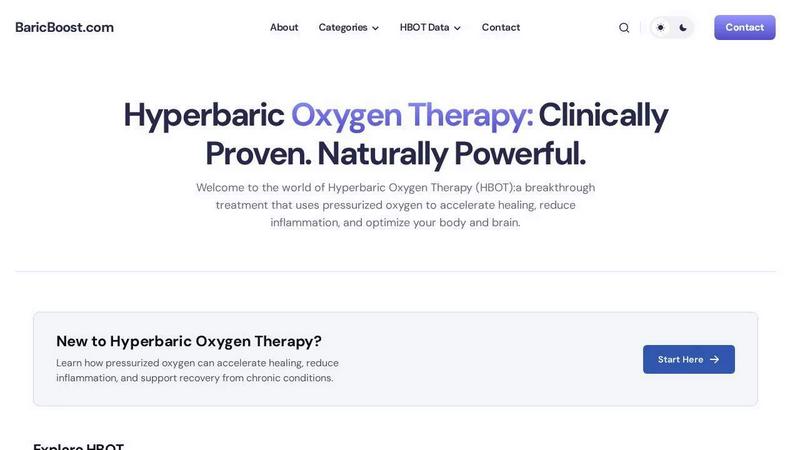
About BaricBoost
BaricBoost is your independent, evidence-based resource for hyperbaric oxygen therapy (HBOT), ozone therapy, and oxygen therapy. It is not a clinic or a product vendor; it is a comprehensive knowledge hub designed to cut through the marketing noise and deliver research-backed guides, clinical data, and honest equipment reviews. The platform serves patients, researchers, journalists, and healthcare professionals who need reliable information to make informed treatment decisions. BaricBoost covers the full spectrum of pressurized oxygen therapy, from the basic science of how hyperbaric chambers work to detailed analyses of clinical outcomes for over 40 conditions. The site features more than 230 evidence-based articles and over 2 million words of research, all independently produced and completely ad-free. Its core value proposition is transparency and accuracy: providing clear explanations of HBOT mechanisms, realistic assessments of success rates, and practical guidance on costs, insurance coverage, and home chamber purchasing. Whether you are a newcomer exploring HBOT for the first time or a seasoned researcher looking for the latest clinical trial data, BaricBoost delivers the structured, data-driven information you need to navigate this complex medical field efficiently.
Features of BaricBoost
Comprehensive Condition Database
BaricBoost covers over 40 conditions where HBOT shows clinical promise, from FDA-cleared indications like decompression sickness to off-label uses for traumatic brain injury, long COVID, and chronic pain. Each condition page includes summaries of clinical evidence, treatment protocols, and realistic outcome expectations, allowing users to quickly assess whether HBOT is relevant for their specific health situation.
Independent Equipment Reviews
The platform provides expert-reviewed buying guides for hyperbaric chambers, including detailed comparisons between soft shell and hard shell chambers, portable vs. home units, and multiplace vs. monoplace setups. Each review is based on technical specifications, oxygen delivery data, safety certifications, and user experiences, with no vendor affiliations or sponsored content to bias the recommendations.
Data-Driven Stat Posts
BaricBoost maintains a dedicated section of data-driven statistical analyses covering HBOT market size, success rates across all 14 FDA-cleared indications, telomere length studies, and long COVID clinical trial results. These posts are designed for journalists and researchers who need verified numbers, including CAGR forecasts, pressure differentials, and percentage improvements from peer-reviewed studies.
Structured Beginner Guides
The platform offers a clear, step-by-step pathway for newcomers with essential reading guides covering chamber types, session protocols, safety considerations, and cost breakdowns. These guides are organized by difficulty level and topic, enabling users to start with foundational knowledge and progressively explore advanced topics like oxygen delivery physics and insurance reimbursement strategies.
Use Cases of BaricBoost
Researching HBOT for a Specific Medical Condition
A patient diagnosed with a condition like long COVID or traumatic brain injury can use BaricBoost to find detailed clinical evidence, success rates, and treatment protocols. The platform aggregates data from peer-reviewed trials, explains the mechanisms by which pressurized oxygen might help their condition, and provides realistic expectations for outcomes, helping them have informed discussions with their healthcare provider.
Comparing Home Hyperbaric Chambers Before Purchase
An individual considering buying a portable hyperbaric chamber for home use can leverage BaricBoost's independent reviews to compare models based on pressure ratings, oxygen delivery capacity, safety features, and price. The site explains the critical difference between soft shell chambers (up to 230 mmHg) and hard shell chambers (up to 1,520 mmHg), enabling buyers to match equipment to their specific therapeutic needs without falling for marketing hype.
Understanding HBOT Costs and Insurance Coverage
A patient evaluating the financial feasibility of HBOT treatment can use BaricBoost's cost guides to understand typical session pricing, insurance coverage options, Medicare and Medicaid policies, and strategies to reduce out-of-pocket expenses. The platform provides transparent breakdowns of costs per session, package deals, and the likelihood of reimbursement for different indications based on FDA clearance status.
Journalistic or Academic Research on Oxygen Therapy
A journalist writing an article on hyperbaric medicine or a researcher compiling data for a study can rely on BaricBoost for verified statistics, market size projections, and summaries of landmark clinical trials. The stat posts section provides ready-to-use data points like the 20-38% telomere increase from the Efrati study or the 6-7% CAGR of the global HBOT market, saving hours of literature review time.
Frequently Asked Questions
What is the difference between soft shell and hard shell hyperbaric chambers?
Soft shell chambers, also known as portable or home chambers, typically operate at pressures up to 230 mmHg (about 1.3 ATA). They are lighter, more affordable, and easier to store but deliver lower oxygen concentrations. Hard shell chambers, found in clinics and hospitals, can reach pressures up to 1,520 mmHg (about 3.0 ATA), allowing for significantly higher oxygen delivery to tissues. The choice depends on your condition, treatment goals, and budget, with hard shell chambers generally required for FDA-cleared indications.
Does insurance cover hyperbaric oxygen therapy?
Insurance coverage for HBOT is limited to the 14 FDA-cleared indications, which include conditions like decompression sickness, carbon monoxide poisoning, and non-healing diabetic wounds. Medicare and Medicaid follow similar guidelines. For off-label uses such as traumatic brain injury, long COVID, or autism, insurance typically does not cover treatment, and patients must pay out-of-pocket. BaricBoost provides detailed guides on navigating insurance claims and finding financial assistance programs.
What are the most common side effects of HBOT?
The most common side effects are temporary and include ear pressure or pain (similar to airplane descent), sinus discomfort, and fatigue. More serious but rare risks include oxygen toxicity (seizures), lung damage, and vision changes, particularly with high-pressure treatments. BaricBoost emphasizes that safety protocols, including proper pressurization rates and session duration limits, significantly reduce these risks. Individuals with certain conditions like untreated pneumothorax or severe COPD should avoid HBOT.
How many HBOT sessions are typically needed to see results?
The number of sessions varies widely by condition and treatment protocol. For FDA-cleared indications like diabetic wound healing, standard protocols range from 20 to 40 sessions. For off-label conditions like traumatic brain injury or long COVID, clinical trials have used protocols of 40 to 60 sessions, often delivered daily over several weeks. BaricBoost provides condition-specific evidence on typical session counts and expected timelines for improvement based on published research data.
Explore more in this category:
Similar to BaricBoost

Sorry100Times.org instantly generates and copies apology text — up to 10,000 repeats, styled and ready to paste.

Your trusted source for residential and rotating proxy provider comparisons, helping developers and businesses make informed decisions for their web s

Free, Live 3D Satellite, Space Weather & Climate Tracker in real time on an interactive globe alongside articles and insights.

Learn French through visual stories told by a native speaker. Words you meet come back on their own, right before you'd forget them.

Free construction calculators with formulas, steps, and assumptions.


Turn Long YouTube Videos into Quick AI Summaries in Seconds.
